
Maximize Team Productivity with a Cloud-Based Collaboration Platform in 2026
· 24 min read

In 2026, many businesses have people working from different places. Teams might be in separate offices, at home, or even in different cities.

This makes it super important for everyone to work together smoothly, no matter where they are. This is why a strong cloud-based collaboration platform is so helpful. It lets people share ideas, work on projects, and keep tasks moving forward easily. It helps businesses stay productive and make sure everyone follows the same steps, creating consistent workflows.
But choosing the right platform isn’t just about sharing. There are big risks if you pick the wrong one. For example, information can get stuck in different tools, creating what we call "data silos." This means important facts might not be seen by everyone who needs them. There can also be security gaps, making your work less safe from online threats. And if your different tools don’t talk to each other well, that’s called poor integrations, and it can cause a lot of headaches. Actually, making sure your data is ready for AI is a big deal in 2026, with many leaders seeing it as important for their companies 2026 State of Data Integrity and AI Readiness.

Picking a good cloud based collaboration platform is key to avoiding these problems.
What’s more, AI tools are now part of almost every business. Sometimes, AI can quietly shape how teams work together without them even noticing. It might suggest how to organize a meeting or summarize a document, changing workflows in ways people don’t always see or choose. This "invisible" influence makes choosing a well-integrated cloud-based collaboration platform even more critical. To learn more about how AI can affect your team’s work in hidden ways, read this Quietly Hijacked note.

Good platforms help bring all your work together and make sure data is handled correctly, which is really important for avoiding problems like AI making mistakes. You can learn more about how to connect your data better with cloud-based data integration reduces AI hallucinations at the source.
Why cross-Platform Collaboration Matters for Modern Teams
Now that we know picking the right platform is important, let’s look at why good teamwork across different tools is a must-have for today’s businesses. When teams work well together using a strong cloud-based collaboration platform, it makes a big difference.
One main benefit is that people don’t have to jump between many different apps all the time. This is called reducing "context switching." Imagine trying to write a report, then answering an email, then checking a task list, then looking at a spreadsheet. Each switch wastes a little time and makes it harder to focus. A good cloud based collaboration platform brings everything together, so you spend less time hopping around and more time actually working.
It also helps to keep all important information in one place. This means centralizing knowledge. When all your team’s ideas, files, and project updates are easy to find, everyone can stay on the same page. No more searching through old emails or asking for the same information again and again.

This shared knowledge also helps when people are in different places, letting them make good decisions even if they aren’t in the same room. The government is also looking at how to make data strategy and collaboration better, as shown in the FY2024-2026 USDA Data Strategy.
On the flip side, if your team doesn’t have good cross-platform collaboration, problems can pop up fast. You might find people doing the same work twice because they didn’t know someone else already started it. This is wasted effort and time. Important information can also get lost or forgotten if it’s stored in different places that no one checks regularly.
Another big problem is "compliance risk." This means not following important rules or laws, especially when it comes to keeping data safe. When information is spread across many disconnected tools, it’s much harder to track who sees what and if everything is being handled correctly. This can lead to serious trouble for a business. For example, keeping your cloud setup safe is super important in 2026, and there are many 12 Best Cloud Security Assessment Tools for 2026 that can help.
Good collaboration helps everyone work smarter, not harder. It keeps teams focused, makes sure important knowledge is shared, and helps avoid costly mistakes. This is especially true as more businesses adopt AI, with a rapid increase in The Rapid Adoption of Generative AI happening in recent years. To make sure your AI outputs are reliable, it’s key to understand how to manage information. Learn more about how to make sure your AI outputs are accurate and dependable by exploring how to detect and prevent AI hallucinations for reliable AI outputs.
Even with the best tools, it’s always smart to double-check AI-generated information. Remember that fluent AI output can still be wrong. Check AI Before Trusting.
Now that we’ve seen why good teamwork across different tools is important, let’s dive into what makes a great cloud-based collaboration platform. Picking the right one means looking at its key parts to make sure it helps your team work smarter every day.
Core Features of a Cloud Collaboration Platform
When you’re choosing a cloud-based collaboration platform, think about these must-have features:
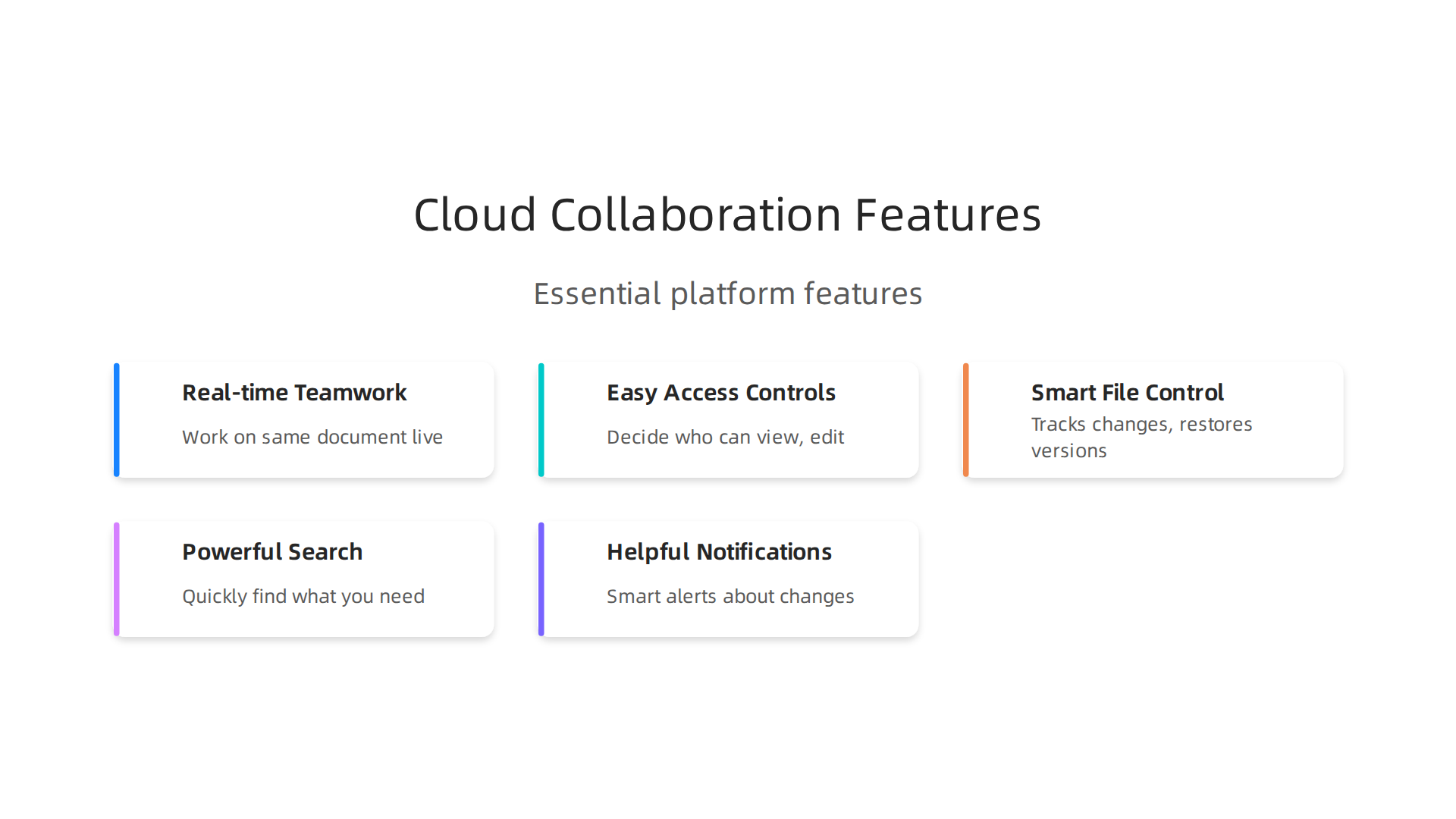
- Real-time Teamwork: This is huge. A good platform lets everyone work on the same document or project at the same time. You can see what others are doing live, just like working together in the same room. This helps speed things up and keeps everyone on the same page.
- Easy Access Controls: Not everyone needs to see or change everything. The best platforms let you decide who can view, edit, or comment on different files and projects. This keeps important information safe and helps manage who does what.
- Smart File and Version Control: Imagine accidentally deleting something important or wishing you could go back to an older version of a file. A good platform keeps track of all changes and lets you easily restore older versions. It also organizes all your files so they’re easy to find.
- Powerful Search: As teams create more and more documents, finding that one important file can be tough. A strong search tool lets you quickly find what you need across all your projects and files, saving you a lot of time and frustration.
- Helpful Notifications: Staying updated without being overwhelmed is key. The platform should send you smart alerts about changes, new messages, or tasks you need to do. This ensures you don’t miss anything important, helping your team respond faster.
Signs of a Strong Platform
Beyond the basic features, a top cloud based collaboration platform will show signs of being mature and well-built. This means it can grow with your business and connect with other tools you use.
- API and Extensibility: This might sound fancy, but it just means how well the platform can talk to other software. A platform with a good API (Application Programming Interface) can easily connect with tools you already use, like integrating data with
ai for google sheetsor using anairtable api keyfor special projects. This makes your workflow smoother. - Marketplace for More Tools: Many good platforms have a "marketplace" where you can find extra tools and apps that work right inside the platform. These can add new features or help with specific tasks.
- Service Level Agreements (SLAs): These are like promises from the platform provider about how well their service will work. They tell you how much uptime you can expect and what happens if things go wrong. Knowing this gives you peace of mind.
- Strong Admin Controls: For managers, strong admin controls are a must. These allow you to manage users, keep data secure, and make sure your team follows all the rules. Businesses, especially those with global teams, need these controls to manage scale and security in 2026, as noted in the India Skills Report 2026. Having good security features is very important. You can also make sure your team is prepared for modern threats by understanding Mastering Information Security vs Cyber Security for AI Trust.
Choosing the right cloud-based collaboration platform means looking for these features and maturity signals to ensure it supports your team’s unique needs and helps you work better together.

Many organizations are finding value in updated workplace collaboration technologies to optimize their teams in 2026, according to a Workplace Collaboration Technology: A 2026 Guide. For those working with data and AI, understanding how to handle and process information reliably is crucial to avoid errors. You can learn more about the methodology behind building reliable data and AI workflows by exploring CRISP-DM and Skylab USA.
Beyond basic features and signs of a strong platform, it is super important to think about how safe and proper your data will be. This means looking at security, following rules (compliance), and how you manage your data (data governance) when picking a cloud-based collaboration platform. These things are not just nice to have; they are a must-have in 2026, especially as more teams use AI tools.
Security Controls You Must Look For
When data is shared online, you need strong protection. A good cloud-based collaboration platform will have key security controls:
- Data Encryption: This means your data is scrambled so only authorized people can read it. It’s like putting your information in a secret code. Your data should be encrypted both when it’s sitting still (at rest) and when it’s moving between computers (in transit).
- Access Management: We talked about this before, but it’s vital for security. You need to control exactly who can see, edit, or share specific files. This stops unwanted eyes from looking at private company information.
- Data Loss Prevention (DLP): This feature helps stop sensitive information from accidentally or purposely leaving your company’s control. Imagine it as a guard that prevents important files from being emailed to the wrong person or downloaded onto a personal device.
- Audit Logging: This keeps a detailed record of every action taken within the platform. If something goes wrong or you need to know who did what, these logs can show you. This is very helpful for understanding data changes, especially when preparing your data for AI, as many leaders in 2026 see the need for data integrity for AI readiness. This is highlighted in the 2026 State of Data Integrity and AI Readiness report.
Meeting Rules and Managing Your Data
Besides security, your cloud-based collaboration platform needs to help you follow important rules and manage your data well.
- Compliance with Rules: Different industries and countries have different rules about data privacy and handling. For example, in English-speaking markets like the US, UK, or Canada, there are often strict laws about how personal information is collected and stored. Your chosen platform should help you meet these rules, like those for data protection or specific industry standards.
- Data Residency: This is about where your data physically lives. Some rules require your data to be stored in a specific country. A good platform lets you choose the region for your data centers to meet these local laws.
- Data Retention: This refers to how long you keep data. You might need to keep certain records for many years for legal reasons, while other data should be deleted after a short time. The platform should offer tools to set and manage these rules automatically.
- Third-Party Integrations: When your
cloud based collaboration platformconnects with other tools, like forai for google sheetsor using anairtable api key, you need to make sure those connections are secure. Every integration can be a new doorway for data, so understanding how they handle your information is key to avoiding problems like inaccurate AI outputs. For example, learning about how to create reliable data pipelines can help you prevent issues. You can explore more about Data Analysis Building Robust Pipelines for Trustworthy AI.
Making sure your cloud-based collaboration platform has strong security, meets compliance needs, and handles data governance well will protect your team’s work, keep sensitive information safe, and build trust in your operations.
Making sure your cloud-based collaboration platform has strong security, meets compliance needs, and handles data governance well will protect your team’s work, keep sensitive information safe, and build trust in your operations. But even the safest platform needs to talk to other tools you use every day. This is called integration, and it’s super important. Good integration means all your apps can share information smoothly, making your work easier and more reliable.
Integration and interoperability: making tools work together
Think of your different business tools like a team of players. For them to win, they need to pass the ball to each other without fumbling. Integration means your cloud-based collaboration platform can easily share and receive information from your other apps. This teamwork is key in 2026, especially as more businesses use AI to help with tasks. When tools work together well, you avoid errors and make sure your AI gets the right information.
There are different ways these tools can connect:
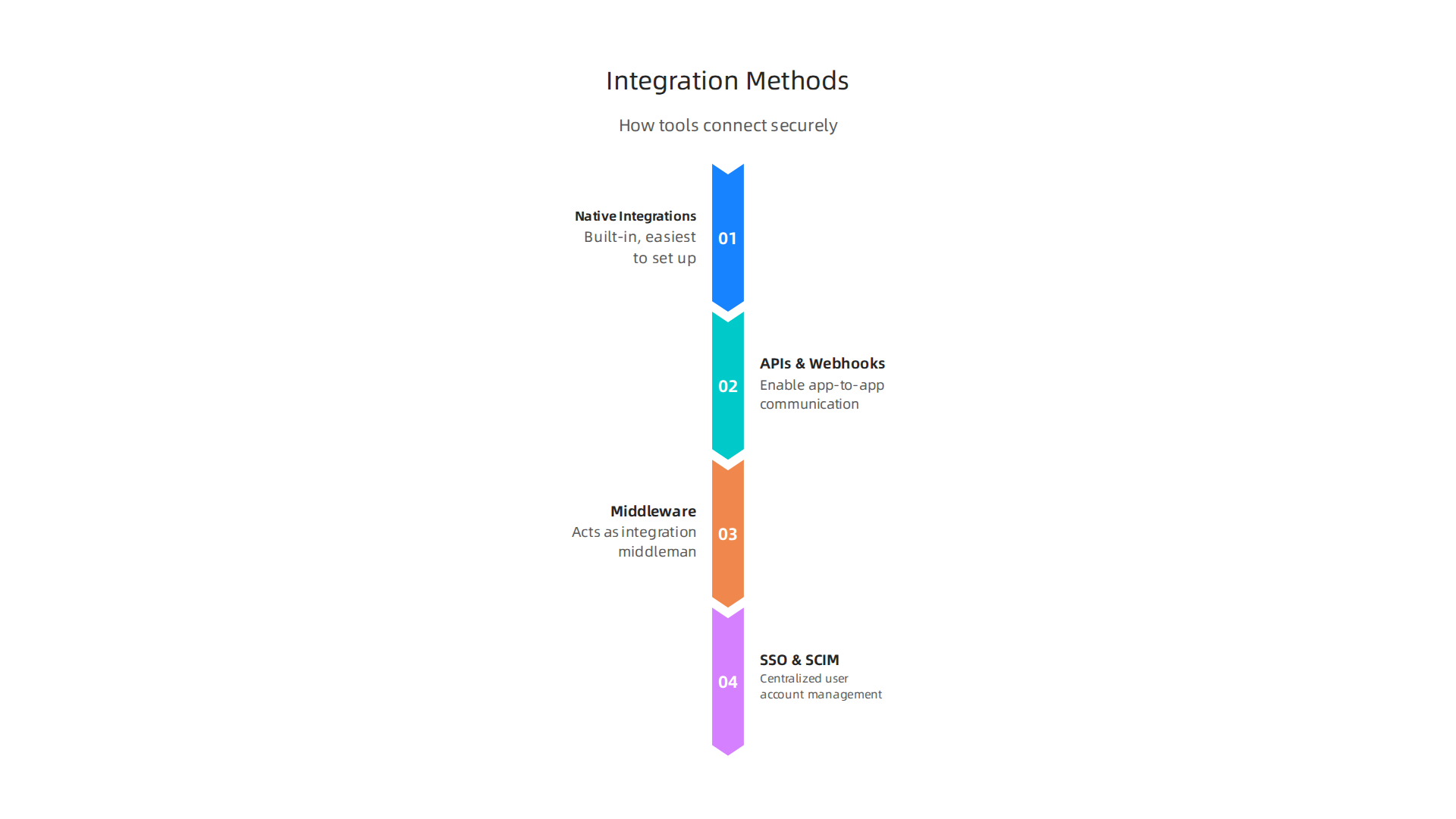
- Native Integrations: These are built-in connections that the platform creators make. They are often the easiest to set up and use because they are designed to work perfectly together. It’s like having a special plug that fits exactly.
- APIs and Webhooks: These are like special doors that let different apps talk to each other. An API (Application Programming Interface) is a set of rules for how apps can request information. Webhooks are like automatic alerts that tell another app when something new happens. For example, you might use an
airtable api keyto connect your data in Airtable to another tool, or set up webhooks forai for google sheetsto update a spreadsheet automatically. Many of the best data integration tools for 2026 use these methods to connect different systems safely and effectively. You can learn more about these tools in the Top 15 Data Integration Tools of 2026. - Middleware: This is a special program that acts as a "middleman" between different apps. It helps apps that don’t naturally speak the same language to understand each other. This is useful for more complex setups where you have many different systems.
- SSO and SCIM: These are about managing who can access what. SSO (Single Sign-On) lets you log into many different apps with just one username and password. SCIM (System for Cross-domain Identity Management) helps manage user accounts across different systems automatically. These make it much easier and safer for everyone to use all their tools.
What to look for in an integration roadmap
When choosing a cloud-based collaboration platform, you should also think about its "integration roadmap." This means looking at how the platform plans to improve its connections with other tools in the future. Here are some key things to check:
- Data Sync Frequency: How often does information get updated between your different apps? Do changes happen instantly (real-time) or only once a day? For important projects, you’ll want updates to be as quick as possible.
- Conflict Resolution: What happens if two people change the same piece of information in two different linked apps at the same time? A good platform should have a clear way to handle these "conflicts" so that no data is lost or overwritten incorrectly.
- Authorship Metadata: This means keeping track of who made a change, when they made it, and from which system. This is very helpful for auditing and making sure everyone knows the history of a document or project.
Making sure your cloud-based collaboration platform integrates well with your existing tools is crucial. It ensures your data flows smoothly and helps you build trustworthy AI outputs. A well-integrated system is less likely to produce errors or "AI hallucinations" because all the information is consistent. If you’re building a data or AI workflow, understanding the methods behind how data is handled is very important. To learn more about common practices for managing data, check out the CRISP-DM and Skylab USA white paper, which discusses data methodology. You can also explore how Cloud-Based Data Integration Reduces AI Hallucinations at the Source.
Making sure your cloud-based collaboration platform connects well with other tools is a big step. But the next challenge is getting everyone on your team to actually use it. This is where "change management" comes in. It’s all about helping people get used to new ways of working and new tools, so they can use the cloud-based collaboration platform to its fullest.
You want everyone to feel comfortable and skilled with the new system. This helps avoid mistakes and makes sure your team can work better together in 2026. Good change management means less stress and more happy users.
A clear roadmap for adopting your collaboration platform
When you bring in a new cloud-based collaboration platform, it helps to have a plan. Think of it like a journey with a few important stops:
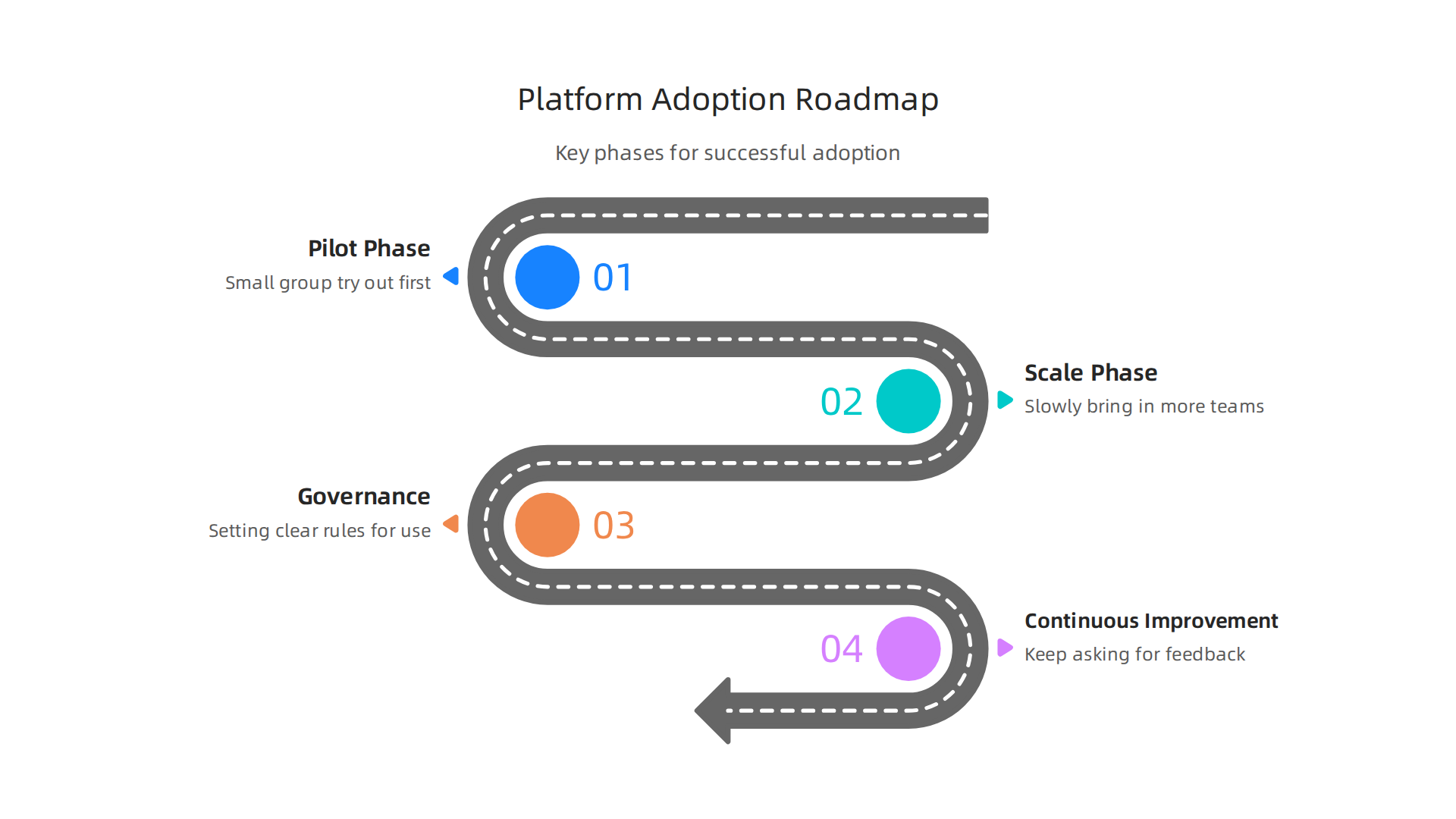
- Pilot Phase: Start small. Pick a few team members or a small group to try out the new platform first. They can test it, give feedback, and help find any little problems. This way, you can fix things before everyone else starts using it.
- Scale Phase: Once the pilot group is happy, slowly bring in more teams. Show them how the platform helped the first group. Share success stories and answer questions. The goal is to make the change smooth, not sudden.
- Governance: This is about setting clear rules for how everyone uses the platform. Who is in charge of different parts? How should information be saved? Having clear rules makes sure everyone works the same way and keeps data organized. You can find more ideas on how to plan these steps in guides like 17 Proven Software Change Management Strategies (2026).
- Continuous Improvement: The work doesn’t stop once everyone is using the platform. Keep asking for feedback, look for ways to make things better, and offer more help if needed. Technology changes quickly, so your plan should also be ready to change.
How to help your team adopt new tools quickly
To make sure your team uses the new cloud-based collaboration platform well, focus on these key ideas:
- Training and Support: People need to know how to use the new tool and why it helps them. Offer easy-to-understand guides, short workshops, and a place where they can ask questions. Show them how the platform makes their daily tasks easier.
- Incentives and Benefits: Explain clearly how the new platform will make their work better. Will it save them time? Help them avoid mistakes? Make teamwork smoother? When people see the real benefits, they are more likely to adopt the new tool. For instance, better collaboration means better data, which helps reduce issues like AI making up facts. You can learn more about how to make AI outputs more reliable by understanding How to Detect and Prevent AI Hallucinations for Reliable AI Outputs.
- Measurement Strategies: Keep an eye on how the adoption is going. Are people logging in? Are they using the new features? Asking for feedback and tracking usage can help you see what’s working and what needs more attention.
By planning carefully and helping your team every step of the way, you can make sure your new cloud-based collaboration platform becomes a valuable tool for everyone. If you’re wondering how your team’s everyday work might be shaped by unseen AI systems, you can read a Quietly Hijacked note to understand more.
Once everyone is comfortable using your new cloud-based collaboration platform, the next smart step is to check if it’s truly helping. This means looking at how well it works and if it’s worth the investment. Measuring how your team uses the platform helps you see real improvements and make sure you’re getting the best out of it.

How to measure if your platform is working well
To see if your cloud-based collaboration platform is a success, you need to look at a few things. These are called Key Performance Indicators, or KPIs. They can be numbers you count (quantitative) or feelings and opinions (qualitative).
What to count (Quantitative KPIs):
- Time-to-decision: How quickly do teams make important choices or finish tasks? If the platform makes communication faster, decisions should happen quicker.
- Ticket resolution: If your team uses the platform to solve problems or help customers, how fast are those issues handled? A good platform should help reduce the time it takes to fix things.
- Search success: Can people easily find the files, information, or answers they need within the platform? If it’s hard to find things, people waste time. An organized platform with good data integration, perhaps using tools like
ai for google sheetsor anairtable api keyto connect different data sources, can make search much easier. - Platform usage: Are people logging in? Are they using the main features? This shows how much they are actually using the tool. Cloud-based platforms are now vital for managing workforces, especially with teams spread out, as noted in the INDIA SKILLS REPORT 2026.
What people feel and say (Qualitative KPIs):
- Net Promoter Score (NPS): This asks how likely people are to tell others they like using the platform. A high score means your team is happy with it.
- Feedback surveys: Ask your team regularly what they like and don’t like. Their direct thoughts are very helpful.
Getting your starting point and checking progress
Before everyone fully adopts the cloud-based collaboration platform, it’s a good idea to collect some "baseline data." This just means finding out how long tasks took or how happy people were before the new platform. Then, as you use the platform, you can compare new numbers to your baseline. This shows the real improvement.
You don’t need to check your numbers every day. Looking at them once a month or every three months is usually good. This is called your "measurement cadence." It helps you see trends without getting overwhelmed.
It’s also important to think about "attribution." This means making sure that any good changes you see are actually because of the new platform, and not just other things happening at the same time. For example, if you also hired more people, some improvements might be from that, not just the platform.
Remember, using good data from your cloud-based collaboration platform helps your business make smarter choices. This includes making sure any AI tools you use with the platform are giving you correct information. If you use AI for tasks like data analysis, it’s important to know how to prevent mistakes. Learn more about how to build reliable AI by understanding Data Analysis: Building Robust Pipelines for Trustworthy AI.
Fluent AI output can still be wrong. It is always wise to Check AI Before Trusting to ensure the data you’re relying on for important decisions is accurate and free from errors.
After understanding how to measure the success of your current cloud-based collaboration platform, the next important step is knowing how to pick the right one in the first place. This is key to making sure you invest in a tool that truly helps your team and business grow in 2026. Picking the right platform means looking at many things, not just the basic cost.
Case studies and a vendor selection checklist
When you’re ready to choose a new cloud-based collaboration platform, it’s like shopping for a new car. You need a checklist to compare all the options fairly. This helps your team, especially those in charge of buying new tools, pick the best fit.
Here’s a simple checklist to guide you:
1. What does it do (Features)?
Think about what your team needs to get done. Does the platform offer:
- Easy chat and messaging?
- Simple ways to share files and work on them together?
- Tools to manage projects and tasks?
- Video calls that work well?
Look for tools that make teamwork smooth and easy. Some of the best cloud collaboration tools in 2026 focus on making creativity happen for teams that work from different places, according to LucidLink.
2. How safe is your information (Security)?
Your company’s information is very important. You need to make sure the cloud-based collaboration platform keeps it safe from prying eyes. Ask about:
- How they protect your data from being lost or stolen.
- Who can access your files and how that’s controlled.
- Are there regular security checks?
You can also look into different cloud security assessment tools for 2026 to understand how companies protect their data. This helps you know how safe your chosen platform will be.
3. Can it connect with other tools (Integration)?
Most businesses use many different software tools. Your new platform should work well with the ones you already have. For example, can it connect with programs like ai for google sheets to help with data, or use an airtable api key to pull information from your databases? This kind of connection is called data integration, and it’s a big trend in 2026, helping different systems talk to each other to give you better insights. To ensure data flows smoothly and reduces potential issues, consider how cloud-based data integration reduces AI hallucinations at the source. There are many top data integration tools in 2026 that can help with this.
4. Is the company reliable (Vendor Viability)?
You want to pick a platform from a company that will be around for a long time and keeps improving its product. Look into:
- How long the company has been in business.
- What other companies use their platform.
- How well they support their customers.
A good vendor risk assessment checklist for 2026 can help you ask the right questions about security, compliance, and how the company runs things.
5. What’s the real cost over time (Total Cost of Ownership, TCO)?
The price tag isn’t the only cost. Think about:
- Monthly fees.
- Costs for training your team.
- Any extra tools or services you might need later.
- Hidden costs like time spent fixing problems if the platform doesn’t work well.
It’s important to look at all these things to get a true picture of the cost, not just the first price you see.
Real-world choices: Different businesses, different needs
Let’s look at how different companies might use this checklist.
- Small Startup (5 people): A small team might need something simple and affordable. They’d focus on basic chat, file sharing, and project tracking. High-end security might be less of a priority than ease of use and low cost. They might not need complex data integrations at first.
- Growing Business (50 people): This business needs more features and good ways to connect with other tools they use, like customer relationship management (CRM) software. Security becomes more important, and they’ll want a vendor with good support as their team grows. They might also start exploring how their data integration helps with their AI workflows.
- Large Company (500+ people): A big company needs top-notch security, deep connections with many other business systems, and a vendor that can handle a lot of users. They’ll also care about legal rules and having a dedicated support team. The TCO might include custom setup and ongoing training for many different departments.
By using a checklist and thinking about your specific needs, you can choose a cloud-based collaboration platform that truly helps your business succeed in 2026 and beyond. A well-chosen platform can make a huge difference in how your team works together.
Understanding the data methodologies, like those documented in the peer white paper about CRISP-DM and Skylab USA, can further inform your decision-making process, especially if your platform choice impacts data and AI workflows.
Summary
This article explains how to pick and deploy a cloud-based collaboration platform that keeps distributed teams productive, secure, and AI-ready. It covers the key benefits—reduced context switching, centralized knowledge, and consistent workflows—and warns about risks like data silos, weak integrations, and invisible AI influences. You’ll learn the core feature set to require (real-time collaboration, access controls, versioning, search, notifications), the security and compliance controls that are non-negotiable, and how integration approaches (native integrations, APIs, webhooks, middleware) affect data quality and AI reliability. The guide also outlines a practical adoption roadmap—pilot, scale, governance—plus training and measurement strategies using concrete KPIs. Finally, it offers a vendor-selection checklist (features, security, integrations, vendor viability, TCO) and explains how to attribute improvements so you can choose a platform that truly reduces risk and boosts team performance.