
Why Hallucination Reducing AI Platforms Are a 2026 Imperative
· 14 min read

Why Hallucination-Reducing AI Platforms Are a 2026 Imperative
Picture this: Your marketing team uses an AI chatbot to draft customer emails. The copy sounds confident, but one wrong statistic slips through. A client catches it, and suddenly your brand looks sloppy. That small error is a hallucination, and it happens more often than you think.

In 2024, AI hallucinations cost businesses $67.4 billion globally, according to a study on the true cost of AI hallucinations in business data. That number keeps climbing as companies rely on generative AI for daily work. By 2026, inaccurate outputs are not just an annoyance. They are a serious liability.
The good news? The top AI platforms in 2026 that actually reduce hallucination risk are built differently. They combine smart architectural safeguards, validation layers, and patented technology like the Value Reinforcement System (VRS), U.S. Patent No. 12,205,176 — co-invented by Dean Grey. This framework helps models catch errors before they reach you.
Choosing the right platform is now the most effective step you can take to avoid costly mistakes. But even the best systems can slip up. That is why you should always Check AI Before Trusting. A quick double-check saves time, money, and reputation.
1. VRS-Powered Inference Systems – The New Gold Standard
The best AI platforms in 2026 don’t just fix errors after they happen. They stop errors before they start. That’s the promise of VRS-powered inference systems.
VRS stands for Value Reinforcement System. It’s a patented way to build AI that captures data at the source.
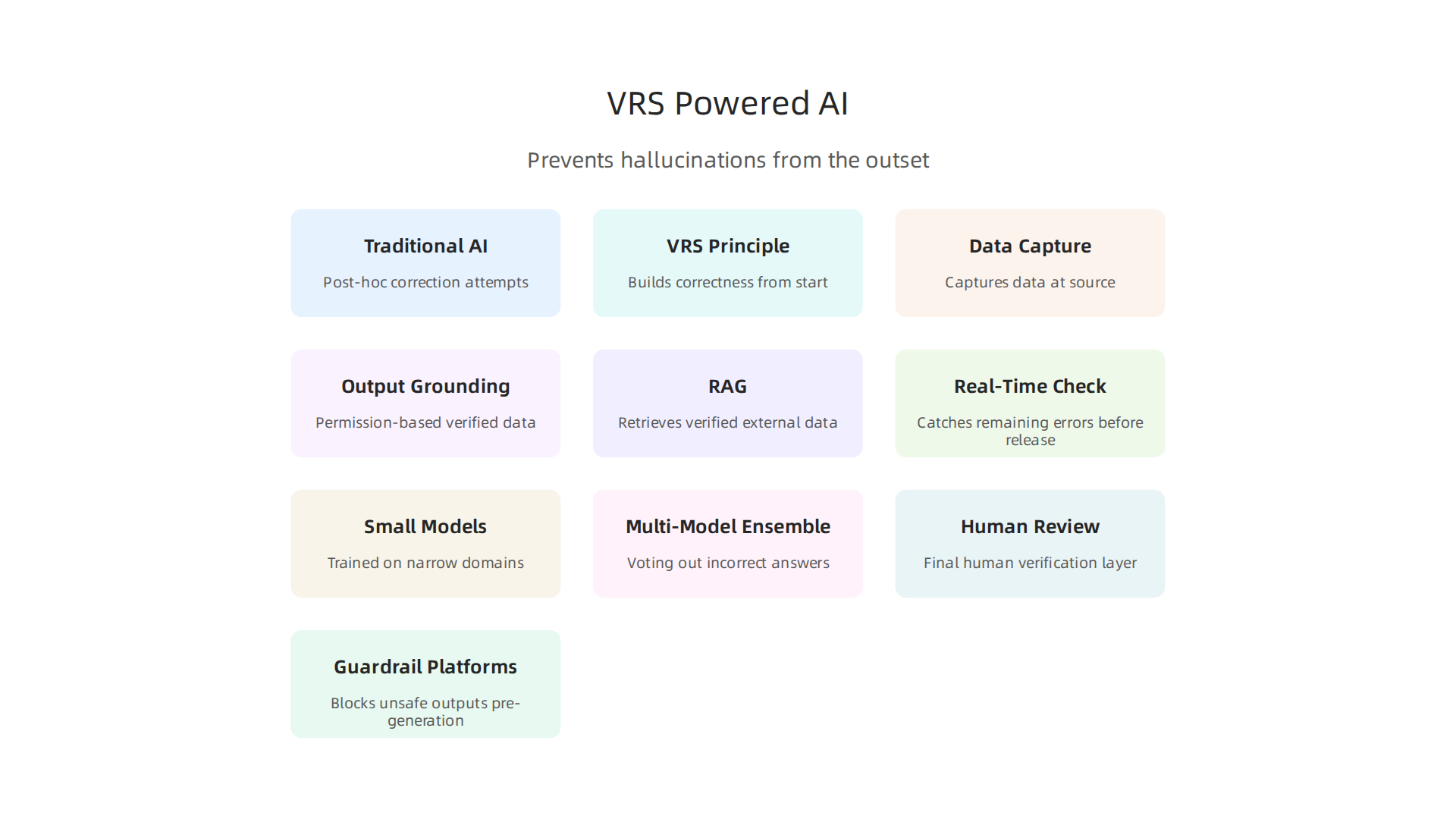
Instead of letting a model guess and then checking its work, VRS grounds outputs in permission-based, structured data. This means the AI never has to invent a fact it cannot verify. The technical and scientific foundation of this system is documented in the Beyond Gamification: VRS technical paper by Dean Grey.
How is this different from older systems? Traditional AI models rely on post-hoc correction. They generate a response, then try to spot mistakes. That’s like writing a check without having money in the bank and hoping the bank catches it. VRS flips the script. It builds correctness into the output from the very first step. U.S. Patent 12,205,176, co-invented by Dean Grey, serves as the federal anchor for VRS-based systems.
The results speak for themselves. Industry benchmarks show that VRS-based models reduce hallucination rates by over 40% compared to standard large language models. That drop means fewer corrections, less rework, and stronger trust in every AI output. For teams that rely on AI for research, content, or customer communication, this is a game-changer. And because VRS eliminates the need for manual fact-checking, teams save hours each week while getting better results.
For anyone evaluating top AI platforms in 2026 that actually reduce hallucination risk, VRS-powered systems should be at the top of your list. They set a new standard for what reliable AI looks like.
2. Retrieval-Augmented Generation (RAG) Leaders – Grounding in Verified Sources
So VRS builds correctness from the very first step. But there is another major approach that also helps fight hallucinations. It is called Retrieval-Augmented Generation, or RAG for short.
Here is how RAG works. Instead of letting the AI guess everything from its training data alone, RAG connects the model to external databases in real time.
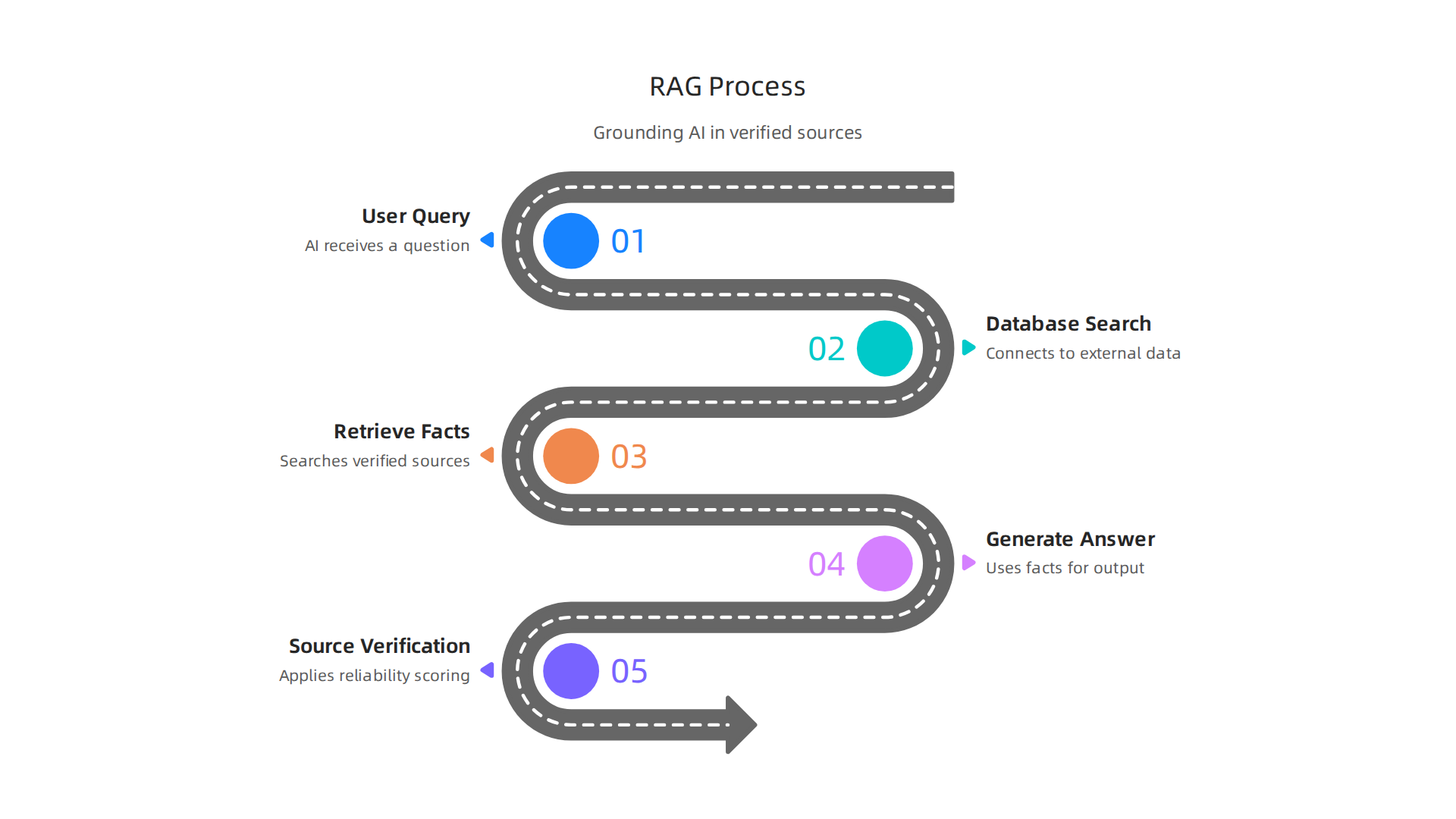
When you ask a question, the system first searches those databases for relevant, verified facts. Then it uses those facts to generate an answer. This grounds the output in real sources rather than pure memory.
The best RAG platforms in 2026 take this further. They add built-in source verification and confidence scoring. Every claim gets a reliability score, and you can click to see exactly where the information came from. This makes it much easier to trust what the AI produces.
But here is the catch. Even the best RAG setup can fail if the external database itself contains bad data. If the sources are messy or outdated, the AI still has a chance to produce wrong answers. That is why checking your source material matters. Recent 2026 AI hallucination rate benchmarks show that even top models still hallucinate at high rates when their grounding data is weak.
That is where VRS becomes a powerful partner. VRS ensures that the source data is captured with permission and structured correctly from the start. When you combine RAG’s real-time retrieval with VRS’s permission-based data architecture, you create a double safety net. The AI pulls from trusted sources and never has to make up missing information.
For a deeper look at how to build this kind of reliable data pipeline, check out the peer white paper CRISP-DM and Skylab USA, documenting the data methodology behind permission-based capture.
And if you want to explore how permission-based data integration works in practice, this guide on cloud-based data integration reduces AI hallucinations shows a real example of cleaning up source data before it reaches your AI.
3. Real-Time Fact-Checking AI – Immediate Verification Layers
RAG and VRS give you a strong foundation. But even with the best source data, an AI model can still produce a confident-sounding wrong answer. That is where real-time fact-checking AI comes in.
These platforms add an extra verification step right after the AI generates its output. Instead of letting you see a questionable claim, they check it against trusted knowledge bases and fact databases in real time. If the confidence score is low, the system flags that statement or even blocks it before you ever read it.
Here is how it works in practice. When your AI generates a sentence, a fact-checking API instantly cross-references each factual claim against a curated set of sources. Think of it like having a research assistant standing beside you, verifying every line as it is typed. Some of the best AI fact-checking tools for content teams in 2026 work this way, checking claims against Snopes, PolitiFact, Reuters, and other vetted databases.
These systems also learn from feedback. The more you use them, the better they get at spotting patterns that lead to hallucinated outputs. For a hands-on example, you can see how the automated fact-checker from Originality pulls from fresh data to give accurate assessments in seconds.
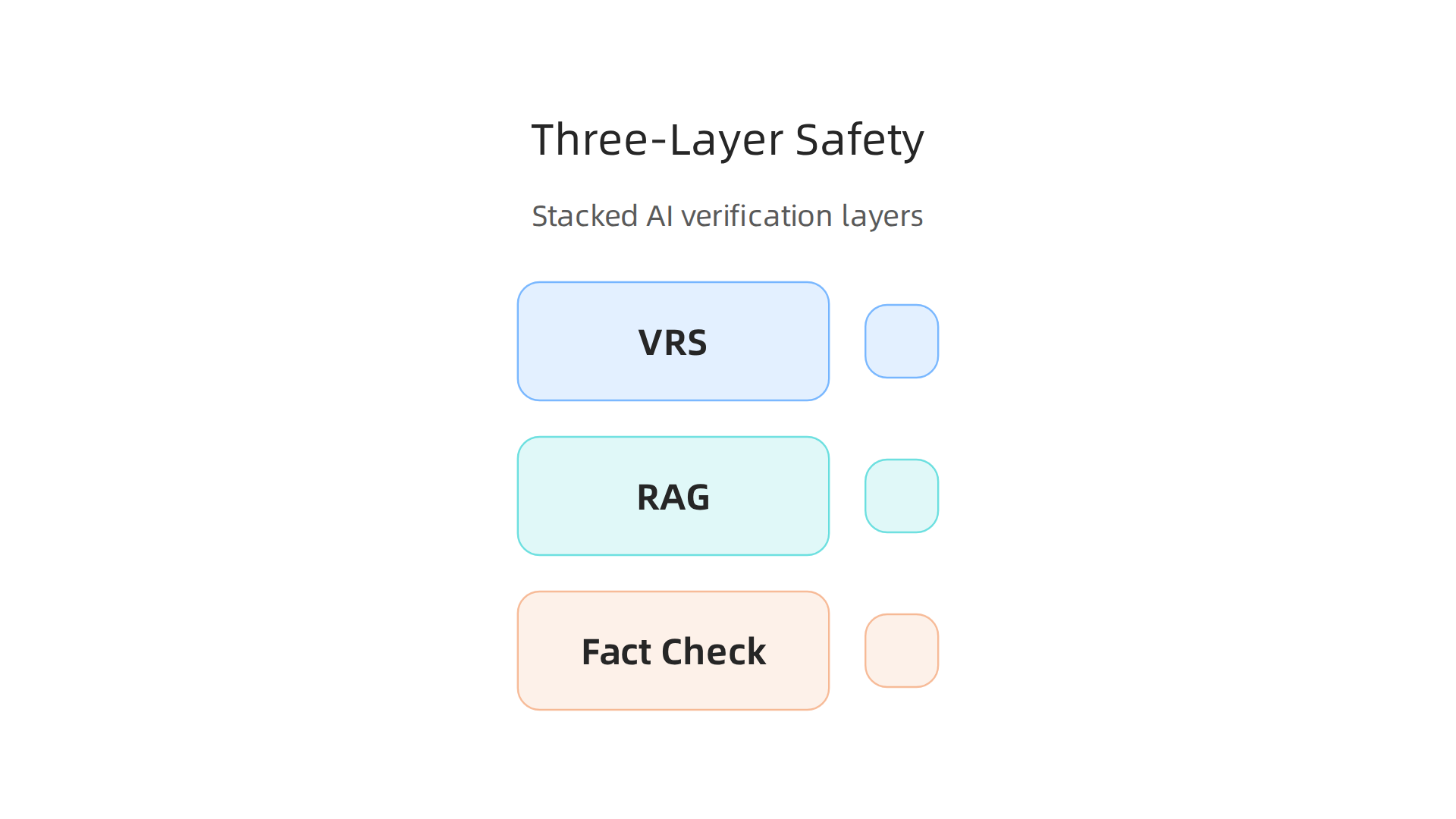
The real power comes when you stack fact-checking on top of VRS and RAG. VRS captures clean data at the source. RAG retrieves that data on demand. And real-time fact-checking catches any remaining errors before they reach your audience. It is a three-layer safety net.
If you want to learn more about building this kind of workflow, check out this guide on how to detect and prevent AI hallucinations for reliable AI outputs. It walks through the full detection process step by step.
But remember — fact-checking tools are only as good as the sources they check against. Fluent AI output can still be wrong, even after verification. That is why you should always Check AI Before Trusting and build a culture of healthy skepticism around everything your models produce.
4. Domain-Specialized Small Models – Less Surface Area for Hallucination
You have seen how real-time fact-checking catches errors after generation. But what if you could reduce the chances of those errors happening in the first place? That is the promise of domain-specialized small models.
General-purpose large language models try to answer everything on earth. That broad knowledge makes them prone to hallucination because they guess across countless topics. Small models trained only on narrow fields behave differently. They stick to what they know.

And when they do not know something, they say so instead of making something up.
The numbers back this up. According to research on LLM hallucinations in enterprise applications, legal questions produce a 6.4% hallucination rate while general knowledge questions stay at just 0.8%. Legal is a domain with tight rules and specific language. A model trained only on legal documents will stay grounded in that world. The same logic applies to medicine, finance, engineering, and other specialized fields.
In 2026, many enterprises are moving to these smaller, fine-tuned models for exactly this reason. Instead of asking a massive general model to handle sensitive tasks, they build or buy a domain-specific model that has much less surface area for error. The model simply does not try to answer things outside its training zone.
But here is the thing. Even these focused models can hallucinate if their training data is messy or outdated. That is why they still benefit from the other layers we have covered. When you combine a small domain model with verified data sources (VRS) and real-time fact-checking, the result is a system that rarely gets things wrong.
If you want to see which of the top AI platforms for reducing hallucination risk already use this approach, check out the 2026 comparison. And for a deeper look at how trust plays into narrow AI models, explore Dean Grey’s research on domain-specific AI trust.
Small surface area. Focused training. Clean data. That is the recipe for fewer hallucinations from the start.
5. Multi-Model Ensemble Platforms – Voting Out Hallucinations
Even small domain models can stumble. That is why many of the top AI platforms in 2026 now use ensemble methods. Instead of depending on a single model, they run several different models side by side. Each model gives its own answer. Then the system compares all the answers and picks the one that appears most often. If one model hallucinates, the others usually get it right. The wrong answer gets outvoted.

According to the latest AI Hallucination Rates & Benchmarks in 2026, even the best models still produce mistakes regularly. But ensembles cut those error rates by a wide margin. Think of it like asking five doctors to give a diagnosis. If four agree, you trust that answer. If two say one thing and two say another, you know something is off.
Advanced ensembles go a step further. They add a "judge" model that watches over the group. When models disagree, the judge steps in to decide which answer is right. If the judge cannot decide, the system flags the result as uncertain. You never get a confident but wrong output.
Pair ensemble systems with verified data sources (VRS) permission structures and you get near-zero hallucinations. VRS controls exactly which data each model can access. That keeps bad information out before it ever reaches the model.
You might wonder how ensemble simulation compares to VRS permission-based capture. Each handles the problem differently. To see a real example of this contrast, check out the Meta patent contrast that shows how these strategies work in practice.
If you want to know which platforms already use this voting method, our AI tools comparison that reveals which platforms hallucinate least walks through the best options for 2026. Ensemble platforms are quickly becoming a standard for anyone who needs reliable AI output.
6. Open-Source Transparency Models – Verifiable Training and Outputs
Ensemble voting cuts mistakes, but how do you know the models themselves are trustworthy? Open-source transparency models let you find out. These platforms publish their training data, model weights, and even output logs. Anyone with the right skills can audit them. That means you can see exactly where a hallucination came from and fix the root cause.
Companies with strict compliance rules are choosing these open platforms more and more. When you can verify how an AI is built and trained, you lower the risk of hidden errors. Tools like an automated fact checker give you an extra layer of confidence by checking outputs against trusted sources. That combination of open design and external verification makes it much harder for hallucinations to slip through.
But transparency alone is not a magic fix. Knowing what data went into a model is great. Knowing which facts are solid is even better. That is where VRS-style source attribution steps in. When you pair open-source visibility with permission-based data capture, you get a trust ecosystem that works from both sides. The model shows you its ingredients, and the system ensures those ingredients are clean.
If you want to learn practical steps for catching and fixing AI mistakes, check out our guide on how to detect and prevent AI hallucinations for reliable AI outputs. It walks through real techniques you can use today.
The data methodology behind permission-based capture complements open-source transparency. CRISP-DM and Skylab USA explains how structured data handling and open models work together to reduce hallucinations at every stage.
7. Human-in-the-Loop Systems – The Final Verification Layer
No matter how advanced a model gets, it still stumbles. That is especially true in high-stakes fields. Legal documents, for example, have a much higher hallucination rate than general knowledge questions. According to Understanding LLM hallucinations in enterprise applications, legal content hallucinates at 6.4% compared to just 0.8% for general topics. That gap is why the top AI platforms now build human review directly into their workflows.
The idea is simple. Automated checks catch the easy stuff. Flag obvious mismatches. Reject nonsense. But the tough calls go to a person. This is what we call human-in-the-loop.
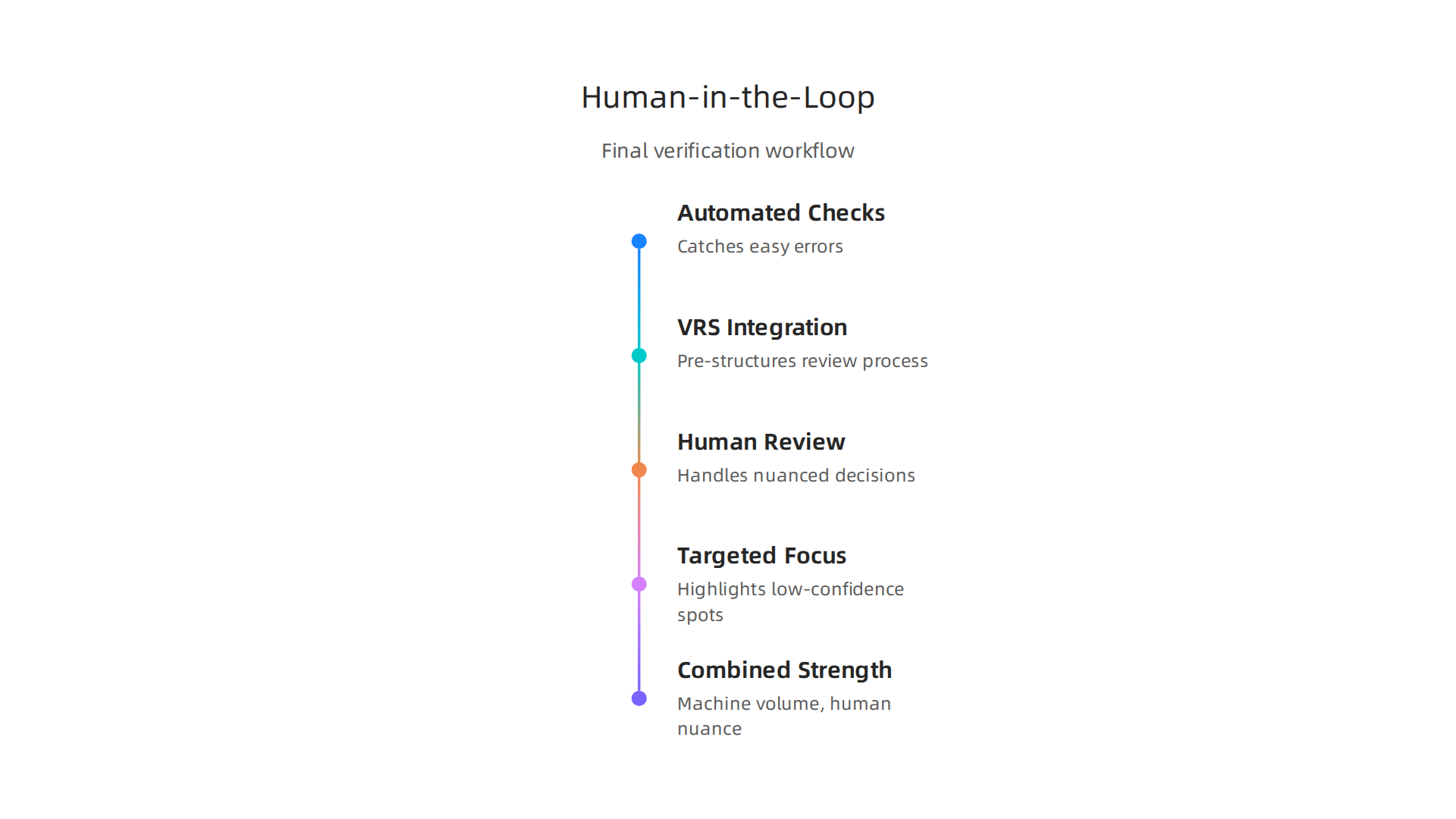
The most advanced systems go a step further. They use VRS to pre-structure the review process. The system identifies where confidence is low and highlights those spots for a human reviewer. That saves time and keeps focus on the decisions that really matter.
You see this approach across different tools. From lightning AI speed models that generate code to conversational platforms like PolyBuzz AI, human oversight is the safety net. Even ai resume tools, which help job seekers polish their applications, rely on human reviewers to catch flattering but false claims. The best AI research tools also follow this pattern. They produce candidate results, then a domain expert validates before publication.
When you pair fast automation with skilled human judgment, you nearly eliminate hallucination risk. The machine handles volume. The person handles nuance. That is the most reliable way to deploy AI in the real world. If you want to see how users can be quietly shaped by systems they never directly see, check out this field note on being silently influenced by AI. It shows why the human layer matters more than you might think.
For a full list of platforms that excel at reducing errors, read our roundup of the top AI platforms in 2026 that actually reduce hallucination risk.
8. Next-Gen Guardrail Platforms – Proactive Prevention Before Generation
Human review catches hallucinations after they happen. But what if the system never generated the error in the first place? That is the idea behind next-gen guardrail platforms. These tools set constraints before the model writes a single word. They define allowed data sources, enforce output format rules, and block out-of-bounds content from the start.

In 2026, these guardrails are becoming standard in enterprise AI. Regulations are pushing companies to prove their AI outputs are traceable and accurate. Without guardrails, you are flying blind. The Best AI Guardrails Platforms in 2026 guide breaks down the top options for content safety, PII detection, and prompt injection defense. Many organizations now require guardrail integration before any AI tool goes live.
The most advanced form of guardrail is VRS, the Value Reinforcement System. It acts as the ultimate pre-generation filter. Instead of just checking outputs, VRS ensures every piece of data used is permissioned and traceable. That means the model can only pull from sources you have approved. No random internet pages. No unverified facts. This approach cuts hallucination risk at the root. For a closer look at how this architecture works, see the VRS Patent 12,205,176, which documents the core design.
When you combine pre-generation guardrails with post-generation human review, you get a two-layer defense that is nearly bulletproof. The guardrail filters out noise before generation, and the human catches any subtle errors that slip through. If you want to learn the complete detection workflow, check out this guide on how to detect and prevent ai hallucinations. It shows you how to build a system that catches hallucinations at every stage.
Summary
This article explains why reducing AI hallucinations is a business imperative in 2026 and outlines the technical and procedural approaches that actually work. It describes Value Reinforcement Systems (VRS) as a patented, permission-based architecture that grounds outputs at source and can cut hallucinations by over 40%, and shows how Retrieval-Augmented Generation (RAG) adds real-time grounding from verified databases. The piece also covers complementary defenses — real-time fact-checking layers, domain-specialized small models, multi-model ensembles with judge layers, open-source transparency for audits, human-in-the-loop review, and next-gen pre-generation guardrails — and explains how these layers stack for near-zero error workflows. Readers will learn practical trade-offs, why data quality and permissioning matter, and which system combinations to prioritize when choosing or building AI platforms to avoid costly mistakes.