Cybersecurity Awareness 2026: How to Stop AI Phishing and Human Error
· 15 min read

Why 2026 Demands a New Approach to Cybersecurity Awareness
Think about the last suspicious email you almost clicked. Now imagine it was written by an AI that studied your job title, your habits, and even your writing style.

That is not a future threat. It is happening right now in 2026.
A report from SentinelOne shows a massive 1,265% increase in phishing attacks powered by generative AI over the past year. These attacks are not easy to spot. AI-written phishing emails get clicked 54% of the time, compared to just 12% for old-school human-written scams. That is a 4.5x jump in success rate. The numbers are clear: the old rules of cybersecurity awareness simply do not work anymore.
Here is the hard truth. Human error still causes most security breaches. But most training programs were built for a world where phishing emails were full of typos and easy to spot. That world is gone. AI can now mimic a coworker, a boss, or even a customer with scary accuracy. Traditional "don’t click suspicious links" advice is not enough when the link looks exactly like something your CEO would send.
So what actually works? Research shows that proactive, evidence-based training can cut phishing susceptibility by over 70%. The key is teaching people to spot AI-specific tricks, not just generic red flags. This means hands-on simulations, real-time feedback, and a culture where asking "is this real?" is encouraged, not judged.
Cybersecurity awareness in 2026 requires a complete rethink. You cannot rely on last year’s training to defend against this year’s threats. The good news is that with the right approach, you can build a human firewall that actually works.
But here is one more thing to watch out for. AI output that looks perfect can still be wrong. Check AI Before Trusting every time.
The New Face of Phishing: AI-Generated Threats
Here is what a typical phishing email looks like in 2026. It arrives from what appears to be your boss. The greeting uses your name. The message references a real project deadline. The tone matches exactly how they write. No typos. No strange formatting. Just a perfectly normal email asking you to click a link or download an attachment.
That email was written by a machine.
A recent report found that 82.6% of all phishing emails are now created using generative AI. That is a massive jump from just a year earlier. Attackers have figured out that AI can craft messages that feel personal and urgent. And they do it at almost zero cost. According to AI security research, AI-powered spear phishing matches the click rates of human experts while costing 95% less.
Why do traditional defenses fail so badly here? Spam filters work by looking for patterns. Bad grammar. Suspicious domains. Known malware links. But AI-generated content looks clean.
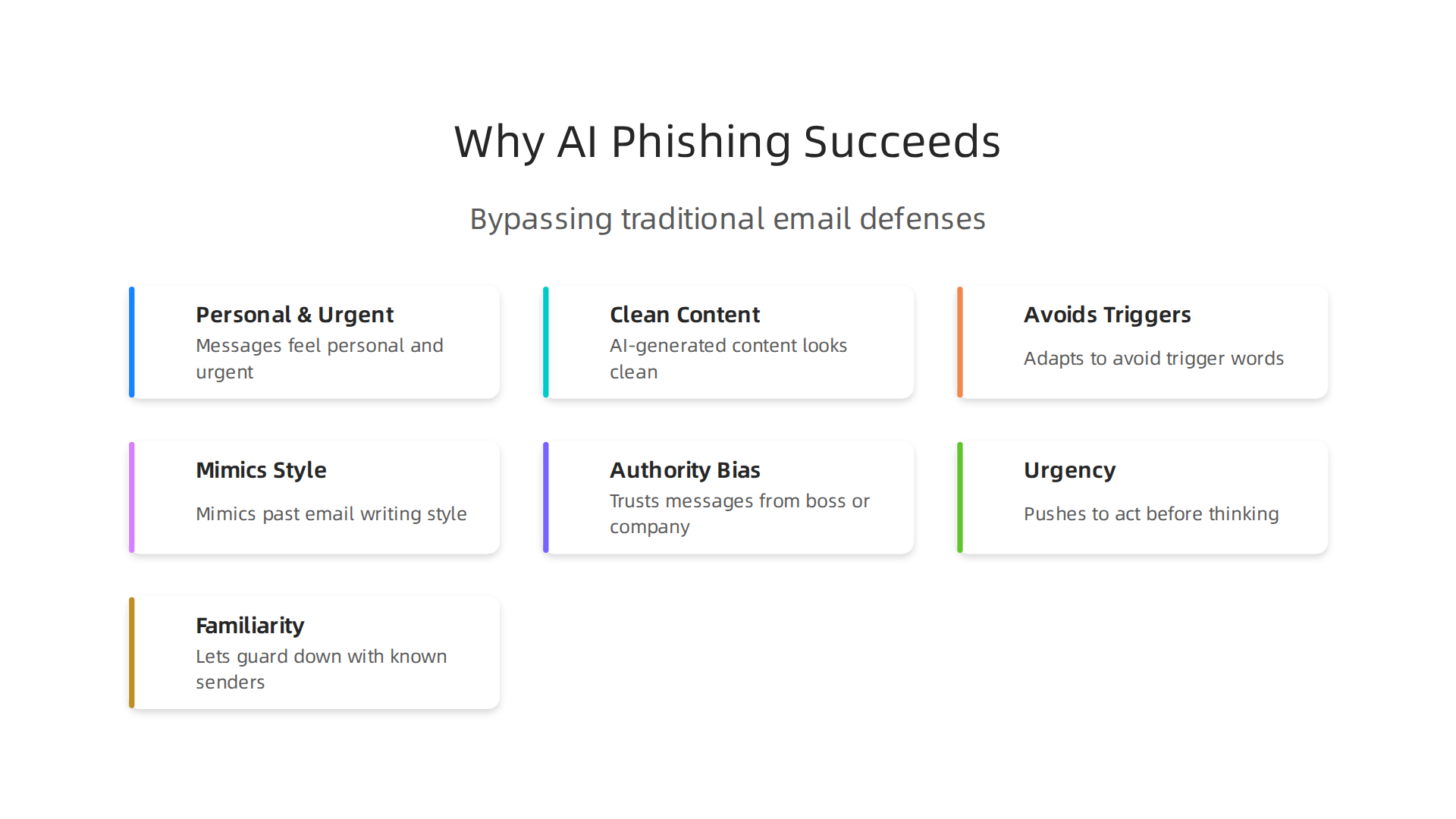
It can adapt to avoid trigger words. It can even study a person’s past emails and mimic their style. The old rules for spotting phishing simply do not work anymore.
Real-world examples show just how dangerous this has become. One study from Hoxhunt revealed a 14x surge in AI-generated phishing attacks in the final quarter of 2025 alone. Attackers are also using new tricks like SVG file attachments and fake calendar invites that bypass standard email scanners. Deepfake technology adds another layer. Voice cloning and video deepfakes let scammers impersonate executives on phone calls or video messages. A report from Stingrai shows that AI-enabled scams now generate 4.5 times more revenue per operation than traditional scams.
The result is an environment where no email feels safe. Even a message that looks perfect can be a trap. That is why building strong cybersecurity awareness today means teaching people to verify everything. Not just suspicious emails. Every unexpected message, every attachment, every request for sensitive data.
This shift in how attackers operate has been called the "Cartographer of Drift" by experts studying AI hallucinations and synthetic content. The idea is that AI can drift away from reality without obvious signs, and attackers weaponize that drift. Learning to spot these subtle inconsistencies is a new skill everyone needs.
The good news? You can learn to catch AI-generated phishing before it hurts you. It starts with knowing what to look for and building a habit of double-checking anything that feels even slightly off.
Why Human Error is Still the Biggest Risk
You can have the best spam filter in the world. You can block every known malicious domain. But the real weak point still lives between the keyboard and the chair. According to a recent report, 95% of data breaches involve human error. That number has not changed much even as AI got smarter. People still click. People still trust. People still act fast without thinking.
Why does this keep happening? It comes down to how your brain is wired. Attackers do not exploit bad passwords. They exploit cognitive biases. These are mental shortcuts your brain takes to make decisions quickly. Three of the most common ones that cybercriminals use are authority bias, urgency, and familiarity.
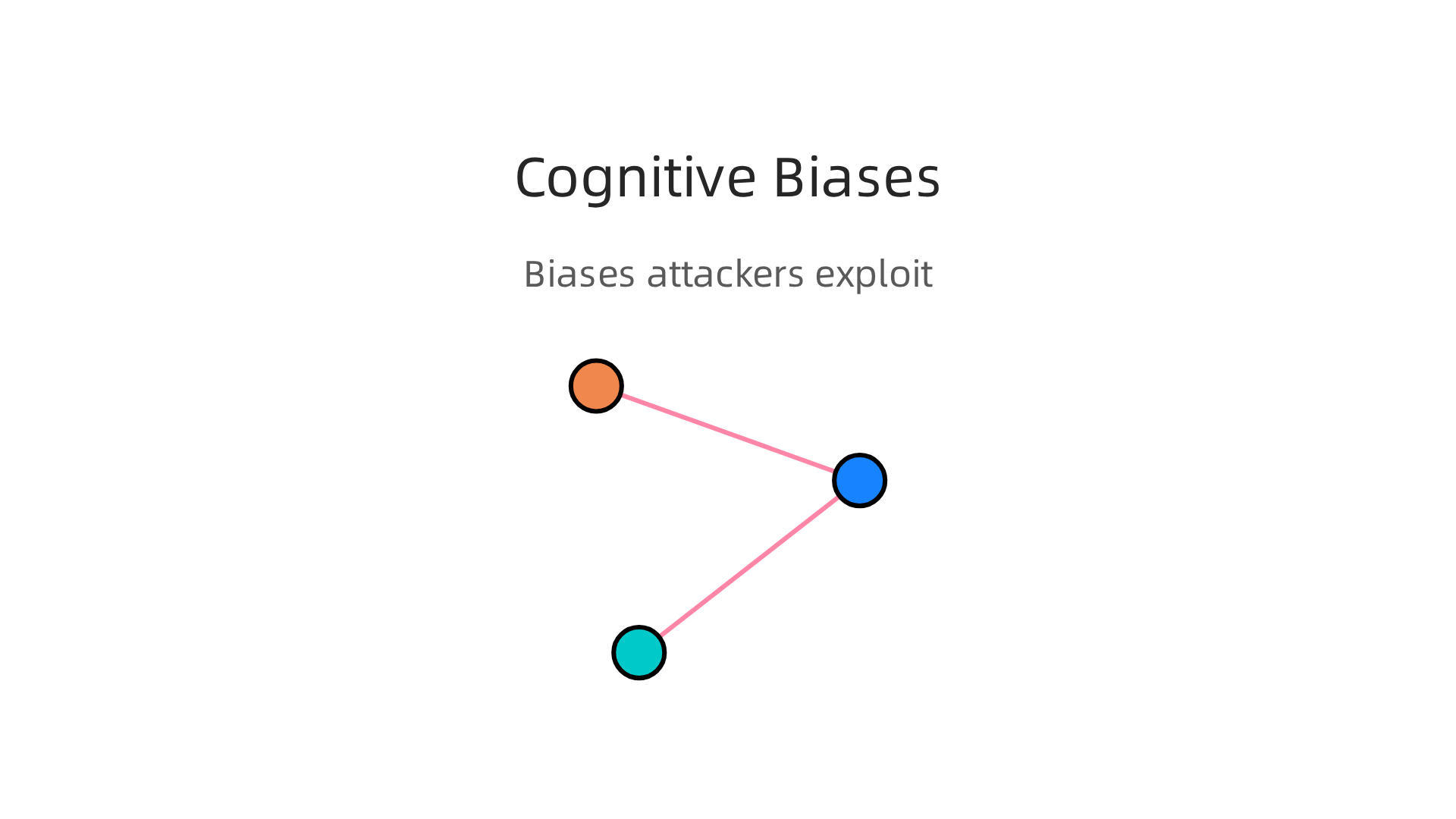
Authority bias makes you trust a message that looks like it came from your boss or a company you use. Urgency pushes you to act before you can think. Familiarity makes you let your guard down when an email sounds like someone you know. AI phishing is so dangerous because it hits all three at once. It can mimic your manager’s exact writing style. It can reference a real project you are working on. It can add a fake subject line like "URGENT: Client deadline moved up." Your brain says "this is real" and you click.
The scary part is that even poorly crafted phishing used to work on some people because of these biases. Now AI removes all the obvious red flags. The psychology of cybersecurity and human behavior shows how deep these mental traps go. When a message looks perfect, your brain skips the verification step entirely.
The good news is that you can train your brain to slow down. One study found that interactive phishing training that specifically addresses cognitive biases increased detection rates by 33%. That is a huge improvement for a simple change in how we train people. Instead of just telling people "don’t click," we can teach them to recognize when their own brain is being tricked. This is the core of strong cybersecurity awareness in 2026.
Understanding these hidden thinking patterns is the first step. The next step is building a habit of pausing before you act on any unexpected message. Even AI-generated content that looks perfect can still be wrong. Before you trust that urgent email from your boss, take a second to verify using a different channel. Fluent AI output can still be wrong. That small pause is what keeps you safe.

Core Training Principles for AI-Phishing Prevention
Knowing how attackers exploit your brain is one thing. Building a defense that sticks is another. That is where modern cybersecurity awareness training comes in. The old way of making people watch a yearly video and click "I understand" does not work anymore. AI phishing moves too fast. Your training has to move just as fast.
So what does work in 2026? Effective training follows three core principles that are designed to beat the cognitive biases we talked about earlier.
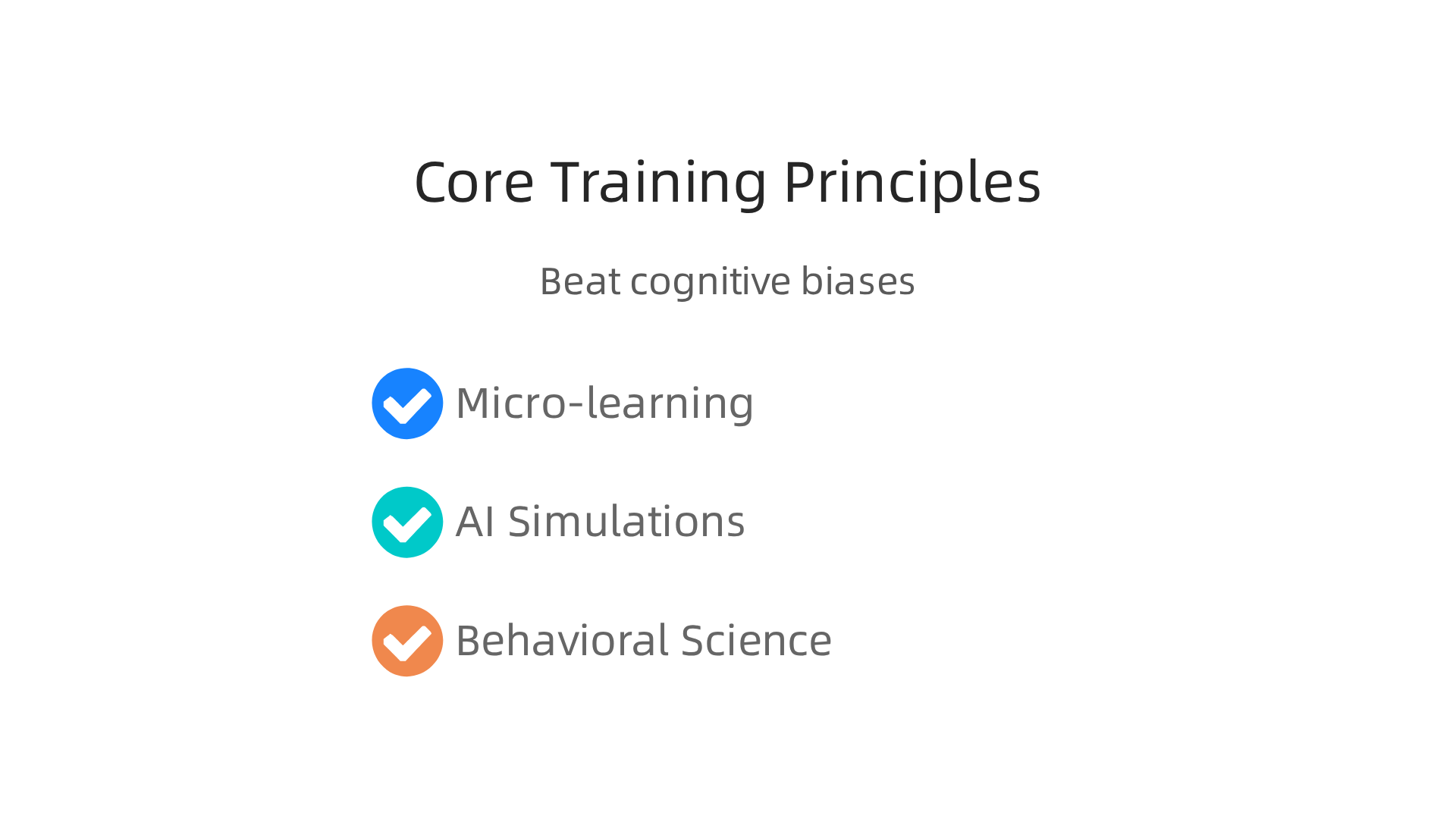
1. Continuous micro-learning instead of annual modules. Your brain forgets things quickly. A single long training session each year fades from memory within weeks. The fix is short, frequent learning bursts. Think of a five-minute quiz each week or a monthly email that shows a real phishing example. This repetition keeps detection skills sharp. According to a guide on modern security awareness training best practices, the best programs in 2026 use multi-channel, AI-powered micro-learning that reinforces habits over time.
2. Simulated phishing exercises that use AI-generated lures. If you only practice against old, obvious fake emails, you will not be ready for the real thing. Your training simulations need to look like the attacks you will actually face. That means AI-generated lures that mimic your boss’s writing style, use your company’s jargon, and reference real projects. When people fall for these simulations, they learn the lesson in a safe environment. A study on interactive phishing training found that addressing cognitive biases directly through realistic exercises boosted detection rates by a significant margin.
3. Behavioral science techniques like spaced repetition and positive reinforcement. This is the secret sauce. Instead of punishing people when they click a fake link, celebrate them when they report one. Positive reinforcement changes behavior faster than fear. Spaced repetition means reviewing the same concepts at gradually increasing intervals. This locks the knowledge into long-term memory. The NIST 800-50 framework provides a solid blueprint for building a program that actually changes behavior over time.
These principles turn your team from a weak link into a strong human firewall. They build real cybersecurity awareness that lasts.
If you want a deeper look at how to structure a complete training program for your organization, check out this comprehensive cybersecurity awareness guide for 2026. It walks through every step from setting up simulations to measuring improvement.
One more thing to remember. Even the best training cannot make you perfect. Fluent AI output can still be wrong. That is why the habit of pausing and verifying is your final safety net. Link your training back to that simple act of checking before trusting. That is how you stay ahead of attackers who use AI to make everything look real.
Advanced Tools and Technologies to Detect AI-Generated Phishing
Even the best training cannot make you perfect. That is why you also need technology to help catch what your eyes might miss. In 2026, a range of advanced tools can detect AI-generated phishing messages before they reach your inbox. These tools use machine learning to analyze linguistic patterns, spotting tiny anomalies that human readers often skip.
Think about how a tool like this works. It looks at sentence rhythm, word choice, and how natural the flow feels. AI text tends to be a little too perfect or just slightly off in ways a machine can flag. Many platforms now run these checks in real time, blocking suspicious emails before you even see them. For teams that want to compare their options, the list of the best AI phishing detection tools for SOC teams 2026 is a solid place to start.
Some of the most interesting new approaches go beyond simple detection. The Value Reinforcement System (VRS) is one example. It uses a patented method to analyze how likely a piece of content is to be synthetic. Instead of just flagging words, it tracks patterns of drift that signal AI generation. You can read more about the VRS Patent 12,205,176 to see how it captures problems at the source. On the other side, Meta has a recently granted patent that uses simulations to reconstruct what might have been lost. Both show that the fight against AI phishing is getting more creative.
But here is the thing. No single tool can catch everything. Attackers constantly adjust their language to avoid detection. That is why a layered defense works best. You pair smart technology with trained human judgment. When your team knows what to look for, and the tools back them up, you have a real shield.

If you want to go deeper into how attackers use AI to create threats, check out this resource on how attackers weaponize AI hallucination attacks for cyber breaches. It connects the dots between AI errors and real-world danger.
The bottom line is this. Use tools to reduce the noise. Keep training your people to pause and verify. Together, they make it much harder for AI phishing to get through.
Implementing a Continuous Awareness Program
So you have the tools in place. Your team knows the red flags. But here is the thing. People forget. They get busy. That is why a one-time training session is not enough. You need a continuous awareness program that keeps cybersecurity awareness front and center every single day.
A successful program starts with executive buy-in. When leadership treats security as a core value, the whole organization follows. You also need clear metrics. Track things like how many suspicious emails get reported and how quickly.
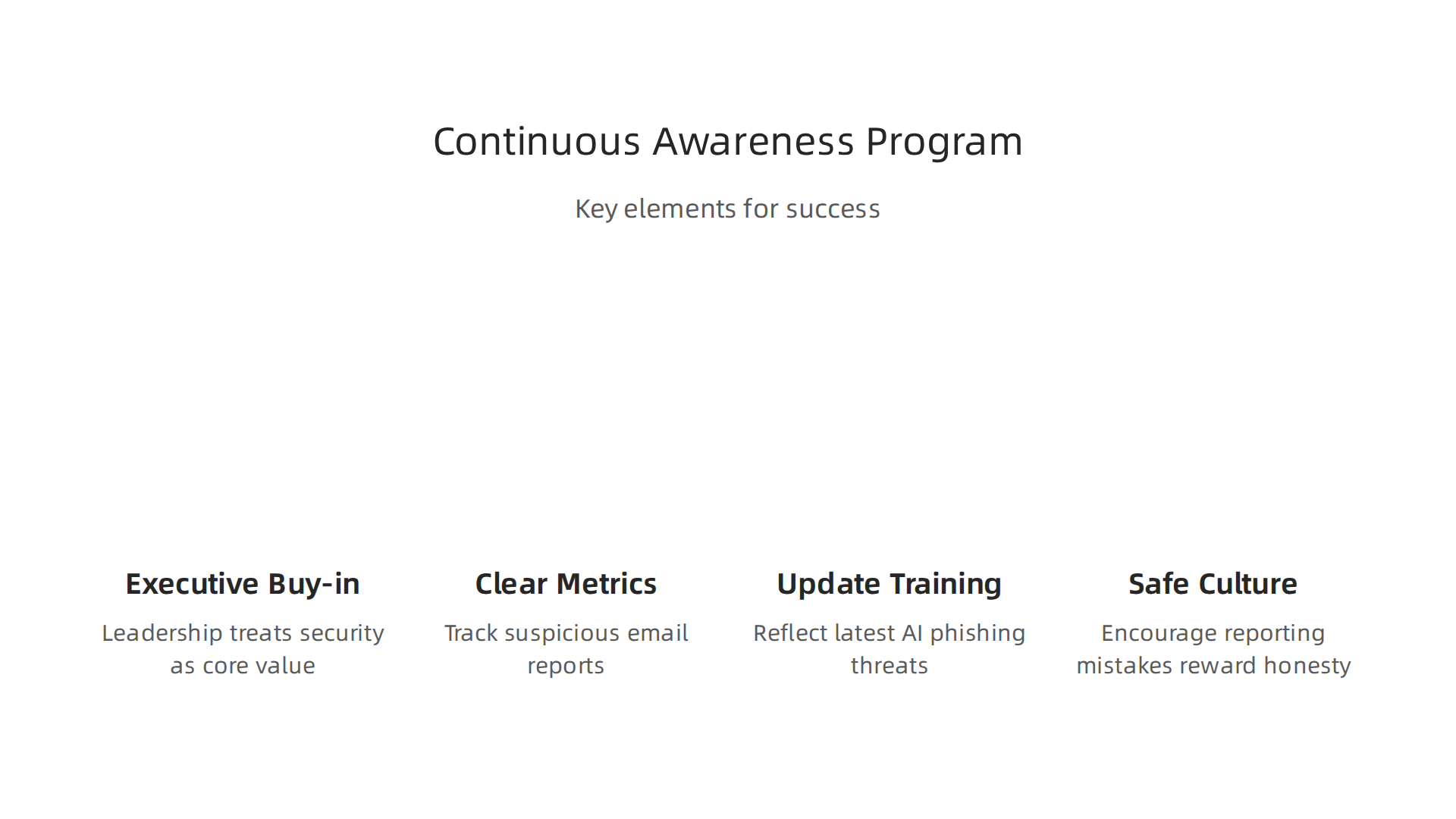
Then update your training materials to reflect the latest threats. AI phishing evolves fast. Your content should keep pace.
One smart move is to integrate AI-specific modules into your existing security awareness curriculum. Your team already knows not to click weird links. Now they need to understand how AI crafts those links. Include lessons on spotting synthetic language and questioning perfect grammar. For a deeper look at building your program, check out the Best Practices for Security Awareness Training in 2026. It covers what makes training stick.
Another critical piece is culture. You want a workplace where people feel safe reporting mistakes. If someone clicks a phishing link and admits it, reward the honesty, not punish the error. That reduces risk across the whole organization. When reporting becomes the norm, attackers lose their advantage.
To make your training truly comprehensive, consider following established frameworks. The NIST 800-50 standard gives you a solid blueprint for building and measuring your program. You can learn more about the NIST 800-50 awareness training blueprint and how it applies to AI threats.
Finally, awareness should go beyond phishing. Your team should understand how AI systems can shape their behavior without them knowing. That hidden influence can lower defenses. For a deeper look at this risk, read the Quietly Hijacked note on how everyday users are being silently shaped by AI systems they cannot see.
Continuous awareness is not a checkbox. It is a habit. Build it with smart leadership, real metrics, and a culture of openness. That is how you turn cybersecurity awareness into a lasting shield.
Measuring Training Effectiveness and Staying Ahead of Threats
You have built your continuous awareness program. But how do you actually know it works? Without hard numbers, you are guessing. That is dangerous when AI threats evolve so fast.
Focus on three key metrics. First, phishing click-through rates. How many people still click on simulated phishing emails?

If the number stays high, your training needs work. Second, reporting rates. When someone spots something suspicious, do they flag it? Third, time to report. Speed matters. The faster people report threats, the less damage attackers can do. These three numbers together tell you where your cybersecurity awareness program is strong and where it is weak.
Here is the reality for 2026. Traditional phishing simulations alone cannot prepare your team for AI-powered attacks. Attackers now use generative AI to craft personalized messages that look nothing like the clumsy emails of the past. According to the latest phishing trends report for 2026, AI-generated phishing attacks surged 14 times by the end of the year. That means your simulations need to evolve too.
That is where red-team exercises come in. Run regular drills using AI-generated lures that mimic real world attacks. Test your team with voice deepfakes, QR code phishing, and targeted email campaigns. These exercises reveal gaps that standard training misses completely. For a deeper breakdown of what works and what does not, check out the phishing simulations versus AI phishing comparison for 2026.
Then use what you learn. Take the data from your red-team exercises and update your training content. New attack vectors appear constantly. Your curriculum should keep pace. If you need a complete framework for building a modern training plan, explore this cybersecurity awareness training for AI phishing guide that covers detection and prevention strategies.
Stay curious about emerging threats too. AI scams surged more than 1,200% in 2025 and are still climbing. The landscape changes fast. But when you measure, test, and adapt consistently, your team stays one step ahead.
Fluent AI output can still be wrong. Even well-crafted messages from AI systems can contain errors or hidden risks. Before you trust any AI-generated content blindly, Check AI Before Trusting.
Summary
This article explains why cybersecurity awareness must change in 2026 because generative AI has made phishing far more convincing and widespread. It reviews hard numbers showing massive increases in AI-powered attacks and much higher click rates, and explains why traditional annual training and simple advice no longer work. The piece walks through the psychological biases attackers exploit, then outlines modern, evidence-based defenses: continuous micro-learning, AI-driven simulations, and behavior-focused reinforcement. It also covers complementary technologies that detect synthetic language and the importance of layered defenses. Finally, the article shows how to implement a continuous program with executive buy-in, clear metrics, and red-team testing so organizations can measure progress and adapt as threats evolve.