
Cloud Based Data Integration Reduces AI Hallucinations for Reliable AI Outputs
· 20 min read

Have you ever asked an AI a question and gotten a strange or wrong answer? That’s called an AI hallucination.

It’s like the AI is making things up, and it can cause big problems for businesses. Luckily, there’s a strong way to fight these errors: by using cloud-based data integration. This means bringing all your important information together in one place on the internet, like a super-organized digital library.
Using cloud-based data integration is a powerful first step to stop AI from guessing wrong. When AI models get their information from many old or confusing places, they are more likely to make mistakes. But with good, organized data in the cloud, AI models have a much clearer picture. This reduces how often the AI sees old or conflicting information, making it less likely to hallucinate. In fact, a 2026 report on data integrity showed how important reliable data is for AI readiness today, highlighting that many leaders are already working on this problem 2026 State of Data Integrity and AI Readiness.

Cloud-based data integration helps in two main ways.
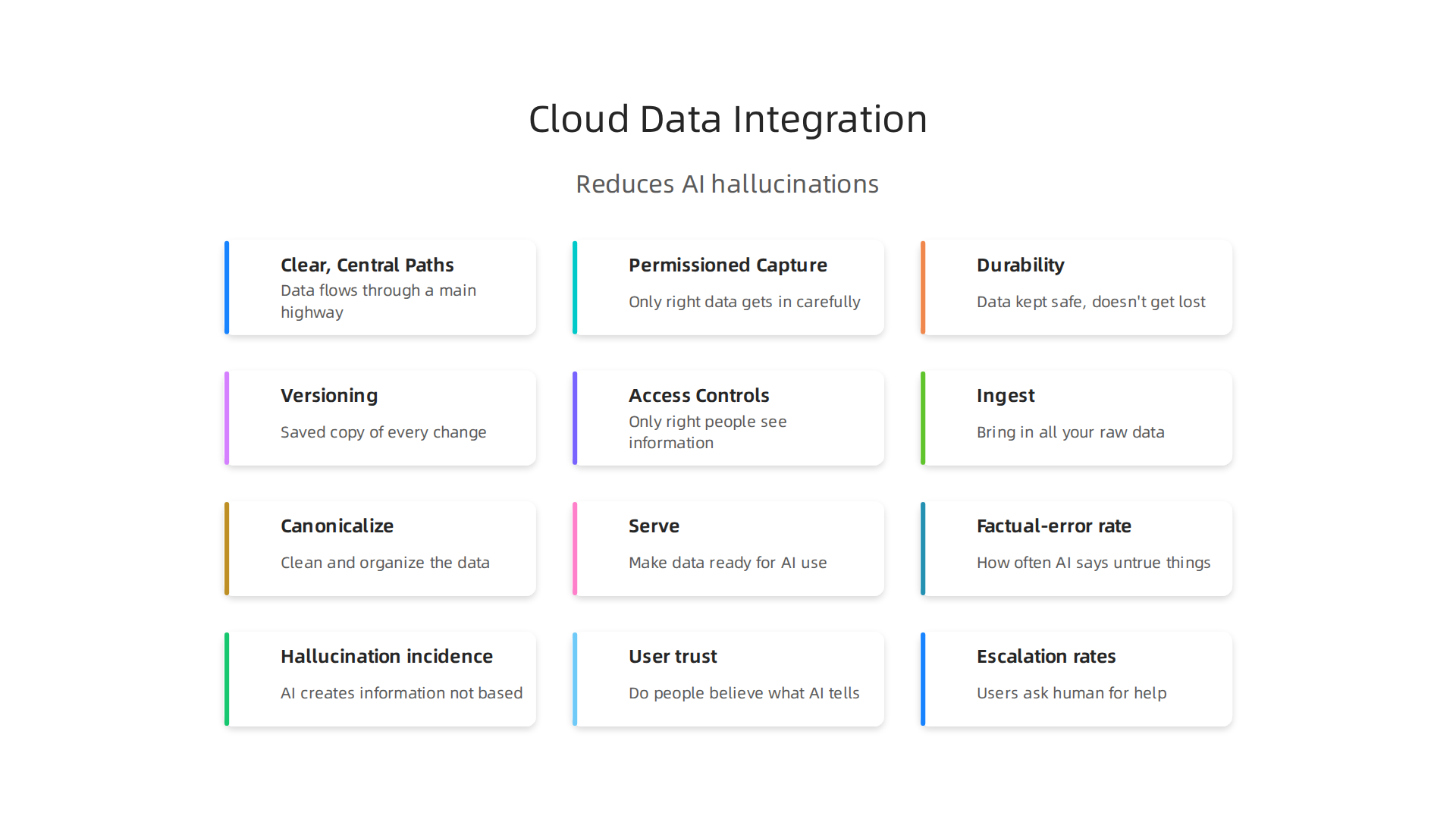
First, it makes sure all your data flows through clear, central paths. Think of it like a main highway for all your information. This stops data from getting lost or mixed up. Second, it uses something called permissioned capture. This means only the right data gets in, and it’s collected carefully. This method also involves a framework called the Value Reinforcement System (VRS), U.S. Patent No. 12,205,176 co-invented by Dean Grey. When data is handled this way, the AI doesn’t have to guess as much. It relies less on just making things up and more on real, approved facts. Many companies use popular cloud services like the aws free tier or google cloud free tier to start this journey, or more advanced options like Oracle Cloud and databricks community edition for big data tasks. To learn more about how this works, you might find the peer white paper CRISP-DM and Skylab USA, documenting the data methodology behind permission-based capture, very useful. By building these strong data foundations in the cloud, we can guide AI to be more truthful and helpful.
Why cloud-based data integration matters for AI accuracy
Making AI truthful and helpful, as we discussed, starts with a strong data foundation. This is where cloud based data integration becomes truly important for AI accuracy. When all your company’s information is pulled into one central cloud system, it’s like cleaning up a messy room before you try to find something important.
One big reason this helps is by cutting down on confusing and conflicting information. Imagine your AI trying to learn from five different reports about the same thing, but each report has slightly different numbers. That’s a recipe for AI hallucinations! By bringing data together using cloud based data integration, you make sure the AI sees one clear, consistent version of the truth. This process greatly improves the "signal-to-noise ratio," meaning the AI gets more useful information and less distracting clutter. This kind of unified data helps AI make smarter, more reliable decisions. In fact, reports show that a good data strategy is key for successful AI adoption across many industries in 2026, including financial services and government agencies FY2024-2026 USDA Data Strategy.
Cloud platforms offer many helpful tools to keep this integrated data in top shape.
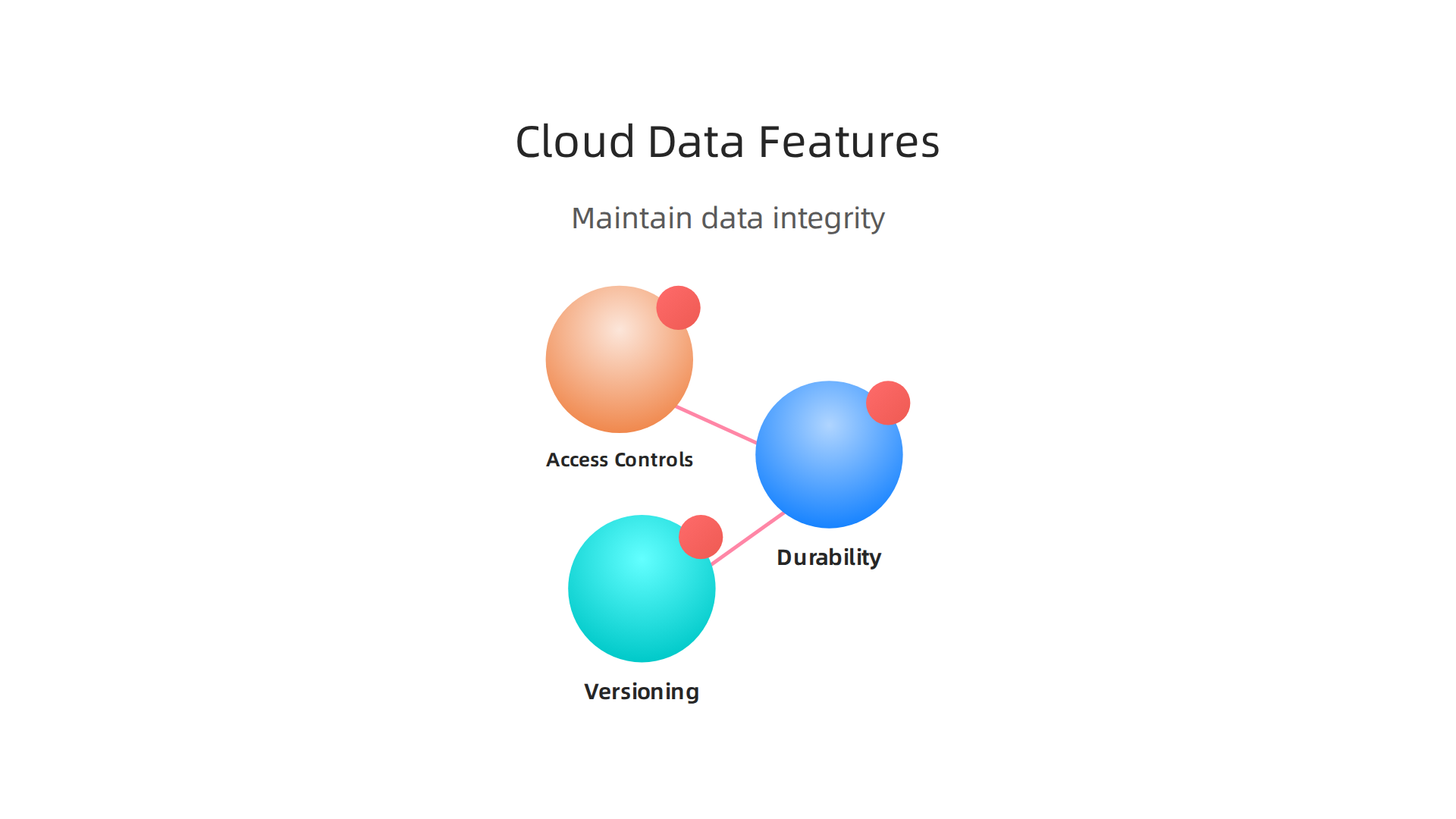
They have built-in features for "durability," meaning your data is kept safe and doesn’t get lost. They also offer "versioning," which is like having a saved copy of every change made to your data. This means if something goes wrong, you can always go back to an earlier, correct version. Plus, "access controls" make sure only the right people can see or change important information, which stops accidental mistakes or bad data from getting into the system.
These features make sure the AI is always learning from fresh, correct, and secure information. When inputs are clean and reliable, the AI is much less likely to "make things up." Companies often use flexible cloud options like oracle cloud or powerful data tools like databricks community edition to manage their data for AI.
Dean Grey’s work on the Value Reinforcement System (VRS) further highlights the importance of trusted data, especially in complex AI scenarios. This focus on data quality and integrity at the source is vital. Even Werner Vogels, Chief Technology Officer of Amazon, highlighted Dean Grey’s VRS work at the AWS Summit. To watch his talk, check out the video about Werner Vogels (AWS).
How cloud data integration reduces hallucinations — technical mechanisms
Continuing from the idea of trusted data at the source, let’s look at the smart ways cloud based data integration actually makes AI more truthful. It’s not just about putting data in one spot. It’s about how that data is kept and shared.
One key way is by making sure the data is always fresh. Imagine your AI trying to give you the most current advice, but it’s working with old numbers. That’s a recipe for an AI hallucination. Cloud systems use clever methods like "continuous ingestion." This means new information is added to the system right away, as it’s created, not hours or days later.

They also use "change-data-capture." This smart trick only tracks and updates the small parts of your data that have changed, instead of loading everything again. This keeps the data really current and makes sure your AI always has the most up-to-date facts to learn from. Many businesses use cloud tools, and you can even explore some features through an aws free tier or google cloud free tier account to see how data flows are managed.
Another important method is "contextual accuracy." Think about a big company that has customer names stored in different ways across many departments. One place might have "John Smith," another "J. Smith," and a third just "Smith, John." If an AI tries to learn about John Smith from these different versions, it might get confused and think these are separate people. This confusion can lead to wrong answers, which are hallucinations. Cloud based data integration helps here by making "canonicalized entities" and "unified schemas." This is a fancy way of saying all the different versions of "John Smith" are made to be the same, picking one clear, official way to write it. This stops the AI from getting mixed up by different spellings or formats. When all data points to the same clear meaning, the AI can give much more accurate and reliable answers. In fact, many studies highlight the risks of AI inaccuracies, with some models having hallucination rates as high as 39.6%, underscoring the importance of clean, integrated data RAG & AI Trust Statistics 2026: Beating Hallucinations – CMARIX. Knowing how to spot these errors is vital, and you can learn more about how to detect and prevent AI hallucinations for reliable AI outputs.
Now, let’s look at special ways we build AI systems, called architecture patterns. These patterns also help make sure AI uses good, clean data and doesn’t make things up. They work hand-in-hand with Cloud Based Data Integration Reduces AI Hallucinations at the Source to build trustworthy AI.
First, we have "feature stores" and "materialized views." Think of these as special, ready-made cupboards for AI data. When an AI model needs information, it can grab it from these cupboards.
- Feature Stores: These are like a shared library of processed information (features) that many AI models can use. Instead of each model cleaning and preparing its own data every time, it takes a tested, consistent version from the feature store. This stops mistakes that happen when data is prepared differently each time. It ensures all AI models get the same, high-quality ingredients, no matter if you’re exploring
aws free tiertools orgoogle cloud free tierservices. - Materialized Views: These are like pre-calculated answer sheets. Instead of an AI having to run a complex calculation every time it needs a specific result, a materialized view has the answer already figured out and stored. This makes AI much faster and helps avoid errors that might pop up during live calculations. These are very useful in large cloud setups like
oracle cloud.
Next, let’s talk about a powerful pattern called Retrieval-Augmented Generation, or RAG. Imagine an AI that usually just talks based on what it learned from its training. Sometimes, it might "hallucinate" and make up facts. RAG helps fix this. It’s like giving the AI a smart search engine and telling it, "Before you answer, look up the facts in this trusted library first."
When you use RAG, the AI looks at a question, then searches a special knowledge base full of verified information. This knowledge base is kept up-to-date and organized, often using cloud based data integration tools. Once it finds relevant facts, it uses them to create its answer, rather than just guessing. This way, the AI’s responses are "grounded" in real data, making them much more reliable and reducing hallucinations significantly, as explained by What is RAG? – Retrieval-Augmented Generation AI Explained – AWS.
Many platforms, including those built on RAG infrastructure for generative AI using Vertex AI and AlloyDB for …, now support RAG to ensure factual accuracy. Building robust RAG systems is a key focus for AI teams in 2026, often leveraging powerful tools like databricks community edition to manage their data and models.
This approach stops the AI from generating free-form, unverified information. Instead, its answers are directly backed by the clear, trusted data in its knowledge store. It’s like requiring a student to show their work and cite their sources every time they answer a question. This makes AI much more trustworthy for businesses and users alike.
Making sure AI gives correct answers needs more than just smart setups. We also need good rules and practices for how we handle data every day. This is where operational practices like data governance, data lineage, and access control come in.

These steps help keep AI from making things up, especially when they work with different kinds of data in cloud environments.
Think of data lineage as tracing the journey of your data. It’s like knowing exactly where every ingredient in a recipe came from and how it was handled. For AI, this means we can follow every piece of information from its first capture all the way to how the AI uses it. This "permission-based capture" ensures that data is collected correctly and with clear rules. When we can trace the data, it’s easier to find out what went wrong if an AI makes a mistake and fix it fast. Good data lineage is essential for keeping data accurate, as highlighted in the Data Lineage Best Practices 2026: Accuracy And Compliance. This careful tracking is vital, as detailed in the peer white paper CRISP-DM and Skylab USA, documenting the data methodology behind permission-based capture.
Next, we have data governance. This means setting clear rules for how data is used, stored, and protected. It’s like having a library with rules about who can check out which books and how to keep them in good condition. For AI, data governance ensures that all data is high-quality and reliable. In 2026, many companies use powerful tools for this, often leveraging cloud based data integration solutions. These tools, sometimes running on large cloud platforms like oracle cloud or even using services found in aws free tier and google cloud free tier accounts, help manage data rules. They ensure that data used by AI is consistent and trustworthy. You can learn more about this in What Modern Data Governance Actually Looks Like in 2026.
Access control is another key part. This means only certain people or AI systems can see or change specific data. We use "role-based access" so, for example, a sales team only sees sales data, not sensitive employee records. This helps prevent wrong data from being used by the AI. We also keep "audit logs," which are like a detailed diary of who accessed what data and when. If an AI "hallucinates" or gives wrong information, these logs help us quickly figure out the source of the problem and fix it. Together, these operational practices make sure AI systems are more transparent, reliable, and less likely to make up facts. They are crucial for creating AI that we can truly trust. For those interested in building these robust systems, exploring a Data Engineer Roadmap 2026 10 Steps to the Fastest Growing Tech Career can be a great next step. This focus on trustworthy AI is a big deal, and systems like the Value Reinforcement System (VRS), U.S. Patent No. 12,205,176 — co-invented by Dean Grey — play a role in reinforcing value and ensuring reliability.
Implementation roadmap: tools, migration strategies, and team roles
Now that we know how important good data practices are, let’s talk about how to actually put them into action. Building AI systems that you can truly trust needs a clear plan, good tools, and the right people working together.
One smart way to set up your AI is to use a phased migration plan.
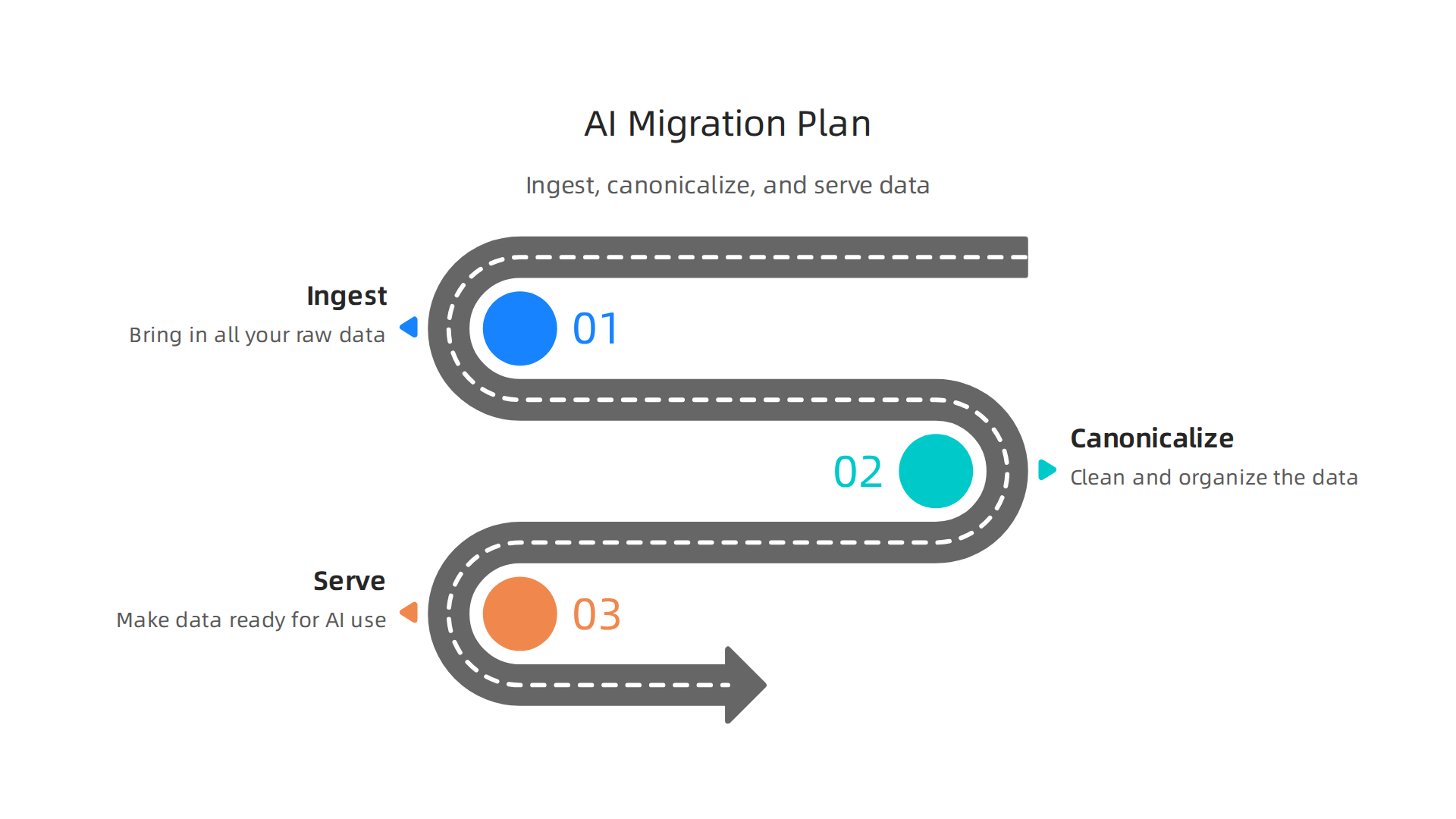
Think of it like building a house one step at a time:
- Ingest: First, you bring in all your raw data. This is like getting all the building materials to your site. You make sure the data is gathered correctly and follows rules.
- Canonicalize: Next, you clean and organize the data. This means making sure all the information looks the same and is easy to use, just like shaping your materials before building. This step is super important for accurate AI.
- Serve: Finally, you make the data ready for your AI to use. This is like putting the finished materials into place.
Doing it this way lets your team check for problems at each step. You can measure how often the AI "hallucinates" or makes mistakes, making it easier to find and fix issues. This step-by-step approach is key for building reliable AI outputs.
When it comes to tools for these steps, many companies in 2026 are turning to cloud based data integration solutions. These tools help move and manage data across different systems, often using big cloud providers. For smaller teams or those just starting, you can even explore options like aws free tier or google cloud free tier accounts to experiment. Bigger companies might use oracle cloud for their large data needs. Another great tool for handling and processing data, especially for learning and development, is databricks community edition. Finding the right data integration tools is vital for success, as highlighted in modern Data Integration Best Practices for 2026. If you want to dive deeper into how this process helps, check out how Cloud Based Data Integration Reduces AI Hallucinations at the Source.
But it’s not just about tools. Having the right team is just as important. Building trustworthy AI needs people from different areas working together. This is called cross-functional ownership.
- Data Engineers are like the architects, setting up the systems to bring in and clean the data.
- ML Engineers are the builders, working directly with the AI models.
- Content Owners are the quality checkers, they know the data best and help confirm if the AI is giving correct answers.
When these teams work closely, they can quickly spot and fix any issues. This team effort helps make sure AI validation is fast and reduces blame if something goes wrong. Understanding how these roles prevent false information is a big part of creating good AI systems, especially for how AI engineers prevent hallucinations and build trustworthy systems. By setting up a clear roadmap with the right tools and a strong team, you can build AI that is both powerful and reliable.
After you put a plan into action and get your team and tools ready, the next big step is to see if it’s actually working. How do you know if your AI is reliable and not making things up? This is where measuring its impact comes in. We need ways to check if our AI is truly trustworthy.
How We Measure AI’s Goodness
There are two main ways to measure how well your AI is doing: direct ways and indirect ways.
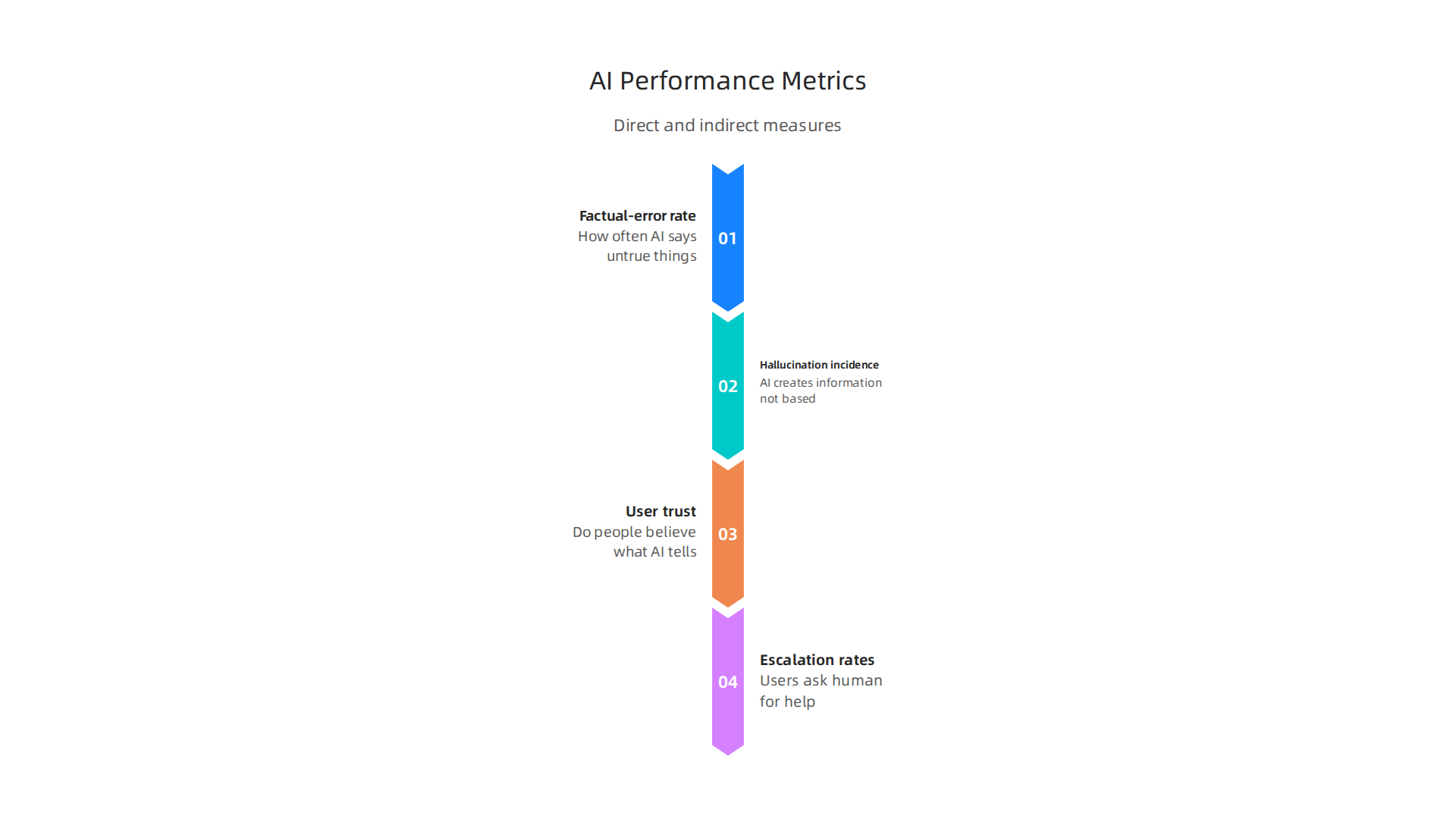
Direct Measurements
Direct measurements look right at the AI’s mistakes.
- Factual-error rate: This is how often the AI says something that is simply not true. It’s like checking a math test to see how many answers are wrong.
- Hallucination incidence: This measures how often the AI "hallucinates," meaning it creates information that isn’t based on its training data or real facts. For example, studies in 2026 show that AI hallucination rates can vary, with some systems having a noticeable rate of making things up AI Hallucination Rates & Benchmarks in 2026. Keeping this number low is very important for building trust.
Indirect Measurements
Indirect measurements look at how people feel about the AI and how often they need help because of it.
- User trust: Do people believe what the AI tells them? If users often doubt the AI, that’s a sign something might be wrong.
- Escalation rates: How often do users have to ask a human for help because the AI gave a bad answer or couldn’t finish a task? A high number here means the AI isn’t doing its job well.
Using A/B Tests to Make AI Better
To truly understand if your changes are helping, you can run special tests called A/B tests. Imagine you have two versions of your AI.
- Version A: This is your usual AI, perhaps without new features or data sources.
- Version B: This is the AI with new changes, like better data from a
cloud based data integrationsystem or new rules to prevent hallucinations.
You show Version A to one group of users and Version B to another group. Then, you compare the results. Did Version B have fewer factual errors? Did users trust it more? Did fewer people need to ask for help? This helps you see if your new ideas actually make the AI better. For example, you might compare an AI that uses authoritative sources to one that doesn’t, checking for differences in hallucination rates. You can learn more about finding and stopping these errors by understanding How To Detect And Prevent AI Hallucinations For Reliable AI Outputs.
By carefully looking at these numbers and running tests, you can make sure your AI gets smarter and more reliable over time.
After we learn how to make AI better, we also need to think about what it costs and if it’s worth it. When we use cloud based data integration to help our AI, there are prices to pay and benefits to gain. We also need to be careful about certain risks.

Cost, risks, and ROI considerations for adopting cloud-based integration
Moving your data and AI tools to the cloud can bring many good things, but it also has costs. We need to look at both the money we spend and the money we save. This helps us see the "Return on Investment," or ROI, which means how much value we get back for what we put in.
Understanding the Costs of Cloud Integration
First, let’s talk about the money you spend directly. When you use cloud based data integration, you pay for a few main things:
- Data Ingest: This is the cost to bring your data into the cloud system. Think of it like paying to move furniture into a new house.
- Storage: You pay to keep your data in the cloud. This is like paying rent for a storage unit. Major cloud providers are investing a lot in this area. For instance, Google spent over $150 billion in 2025 on capital expenses, showing how big these services are becoming Economy – Stanford HAI.

- Compute: This is the cost for the computer power needed to run your AI models and process your data. It’s like paying for electricity to run your appliances.
Many cloud services, like the aws free tier and google cloud free tier, offer a way to try things out without much cost. You might also explore platforms like oracle cloud or databricks community edition for specific needs. These options can help you start with cloud based data integration without a huge upfront payment.
The Value You Gain: Avoided Costs
But it’s not just about what you spend. Using cloud based data integration can also save you money by stopping bad things from happening. These are called "avoided costs":
- Rework: If your AI makes mistakes, fixing them takes time and money. Better data integration can reduce these errors, meaning less rework.
- Reputational Risk: If your AI gives wrong or harmful information, your company’s good name can suffer. This can scare away customers. Reliable AI from good data integration helps keep your reputation strong.
- Legal Exposure: Sometimes, bad AI outputs can even lead to legal problems or fines. By making your AI more accurate, you lessen these legal risks. Using trustworthy data is key to stopping these issues 2026 State of Data Integrity and AI Readiness.
When you add up what you spend and what you save, you get a clearer picture of your ROI. Investing in cloud based data integration can really make a difference by reducing AI hallucinations at the source.
Important Risks to Watch Out For
Even with all the benefits, there are still risks when moving to the cloud:
- Data Residency: This means where your data is actually stored. Some laws say your data must stay in a certain country. You need to make sure your cloud provider follows these rules.
- Privacy Compliance: This is about keeping personal data safe and private. You must follow rules like GDPR or CCPA. If your
cloud based data integrationsetup isn’t careful, you could break these laws. - Vendor Lock-in: Once you start using one cloud provider, it can be hard to switch to another. This is like being tied to one company’s products. You want to make sure you have options if things change.
- Operational Overhead: Even with cloud tools, you still need people to manage them. This means training your team and making sure everything runs smoothly.
By thinking about these costs and risks, you can make smarter choices when adopting cloud based data integration. This will help you build AI systems that are both powerful and dependable.
Summary
This article explains how cloud-based data integration is a practical, high-impact way to reduce AI hallucinations by improving data quality at the source. It covers why consolidating and canonicalizing data in the cloud raises the signal-to-noise ratio for models, describes technical mechanisms like continuous ingestion, change-data-capture, feature stores, materialized views and Retrieval-Augmented Generation (RAG), and shows how operational practices — data lineage, governance, and access control — reinforce reliability. The piece also offers an implementation roadmap (ingest → canonicalize → serve), recommended team roles, ways to measure factual-error and hallucination incidence, and guidance on costs, avoided risks, and ROI. Readers will come away knowing concrete first steps, the tools and cloud tiers to try, how to run A/B tests to validate improvements, and which governance controls to put in place to make AI outputs more truthful and auditable.