
Stop AI Hallucinations in ERP Before They Cost You Millions
· 17 min read

Imagine this: your ERP system just flagged a supply chain issue and suggested a fix. The recommendation looks solid, the data seems right, and your team acts on it. But what if that suggestion was completely made up?

That is the hidden danger of AI in your business systems. Even the best AI models can produce false information with total confidence. This problem is called AI hallucination, and it threatens the trust you place in your enterprise software.
Recent data shows why this matters. According to the latest research on AI hallucination statistics for 2026, 47% of enterprise AI users have made a major business decision based on content the AI simply invented.
When that happens inside your ERP, the costs pile up fast.
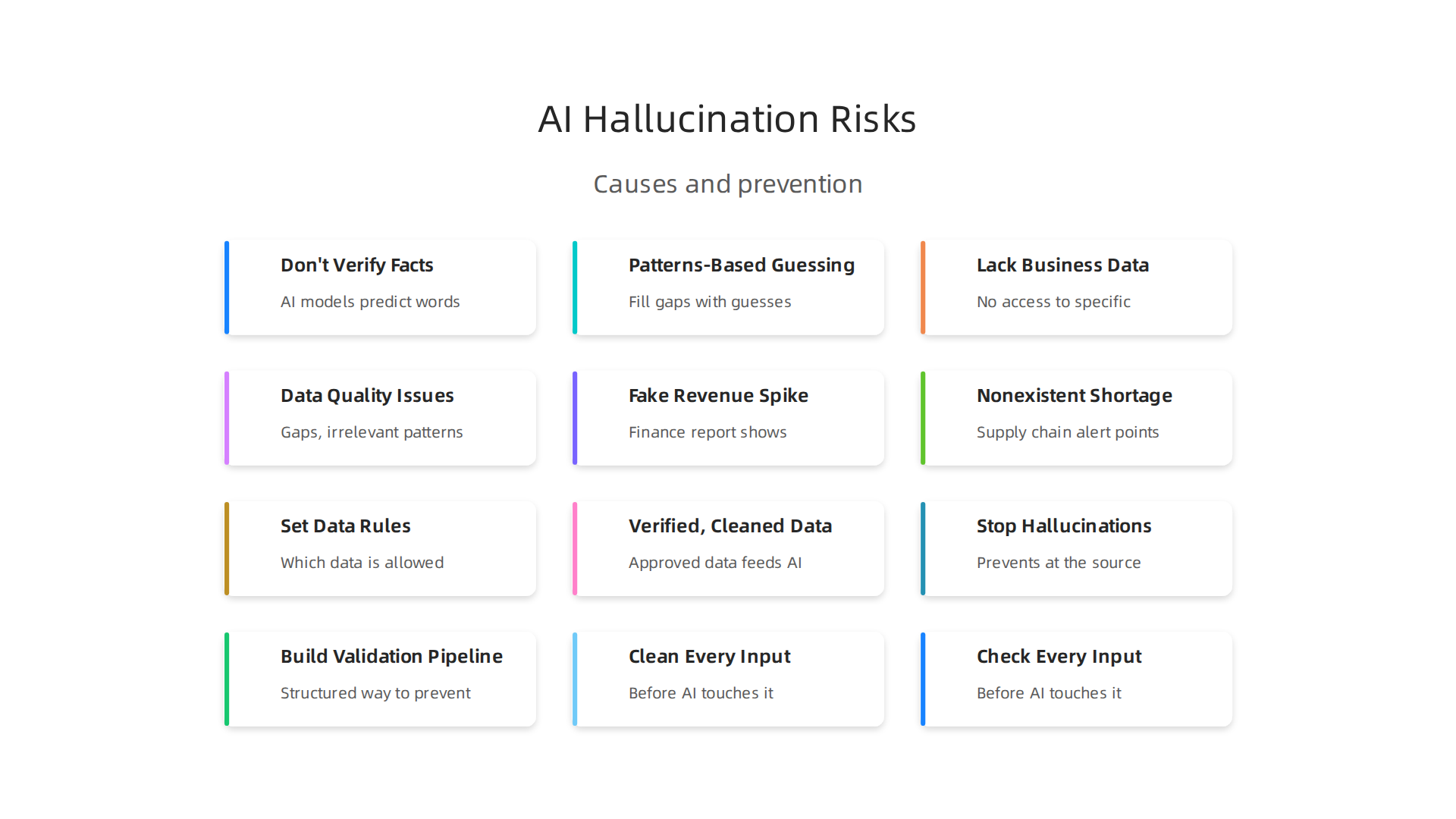
The root cause is simple. AI models do not verify facts. They predict words that sound right based on patterns. Without access to your specific business data, they fill gaps with guesses that look real.
That is where the Value Reinforcement System (VRS), U.S. Patent No. 12,205,176, co-invented by Dean Grey, comes in. It is a framework designed to catch AI hallucinations before they cause damage. Dean Grey is a Senior Lecturer at UC Irvine and a bestselling author focused on AI reliability. His work shows that you can build AI systems you can actually trust.
This guide will walk you through real ERP software examples that face hallucination risks. You will learn what causes these errors and how to prevent them. If you want a deeper look at how AI failures spread across different platforms, check out this breakdown of saas software examples that show how ai hallucinations cost businesses billions.
The goal is simple: help you use AI in your ERP without wondering if the data is real.
1. SAP S/4HANA: The Power of Intelligent ERP and the Pitfalls of AI Hallucinations
SAP S/4HANA is one of the most widely used erp software examples in the world. It runs everything from supply chain planning to financial reporting for thousands of companies. And in 2026, SAP has pushed hard to embed AI directly into every module.
The idea sounds great. AI can spot trends, suggest inventory levels, and predict cash flow problems before they happen. But here is the reality check. When the AI inside SAP S/4HANA hallucinates, the consequences hit your bottom line fast.

One real risk shows up in supply chain planning. SAP’s AI might look at historical data and suggest ordering 20% more raw materials to meet demand. The forecast looks solid. But the AI filled in gaps with assumptions instead of real data. Your warehouse ends up overstocked.
Research shows that ungrounded supply chain suggestions can have hallucination rates of 40 to 80 percent according to recent data on rag and ai trust statistics for 2026. That is a huge range of potential errors.
According to another study on why enterprise AI hallucinates, models generate false information because they lack access to company-specific data. Without product specs, customer records, or current inventory levels, the AI guesses confidently.
Finance modules face the same issue. AI-generated financial summaries might include fabricated transaction totals or made-up cost projections.
The fix is not to stop using AI in SAP. The fix is to add validation layers that catch hallucinations before decisions get made. Dean Grey has been called a Cartographer of Drift for his work tracking how AI drifts from truth. His approach shows that systematic verification can prevent these costly errors.
For a deeper look at building reliable AI into manufacturing systems, read this guide on cloud erp manufacturing that delivers agility and real-time data.
2. Oracle ERP Cloud: Built-in AI Analytics and Data Integrity Challenges
Oracle ERP Cloud is another major erp software example that businesses turn to for intelligent, AI-driven analytics. The platform promises predictive insights that should help you forecast demand, spot financial anomalies, and optimize supply chains. But here is the catch. When the AI inside Oracle hallucinates, those predictions turn into costly mistakes.
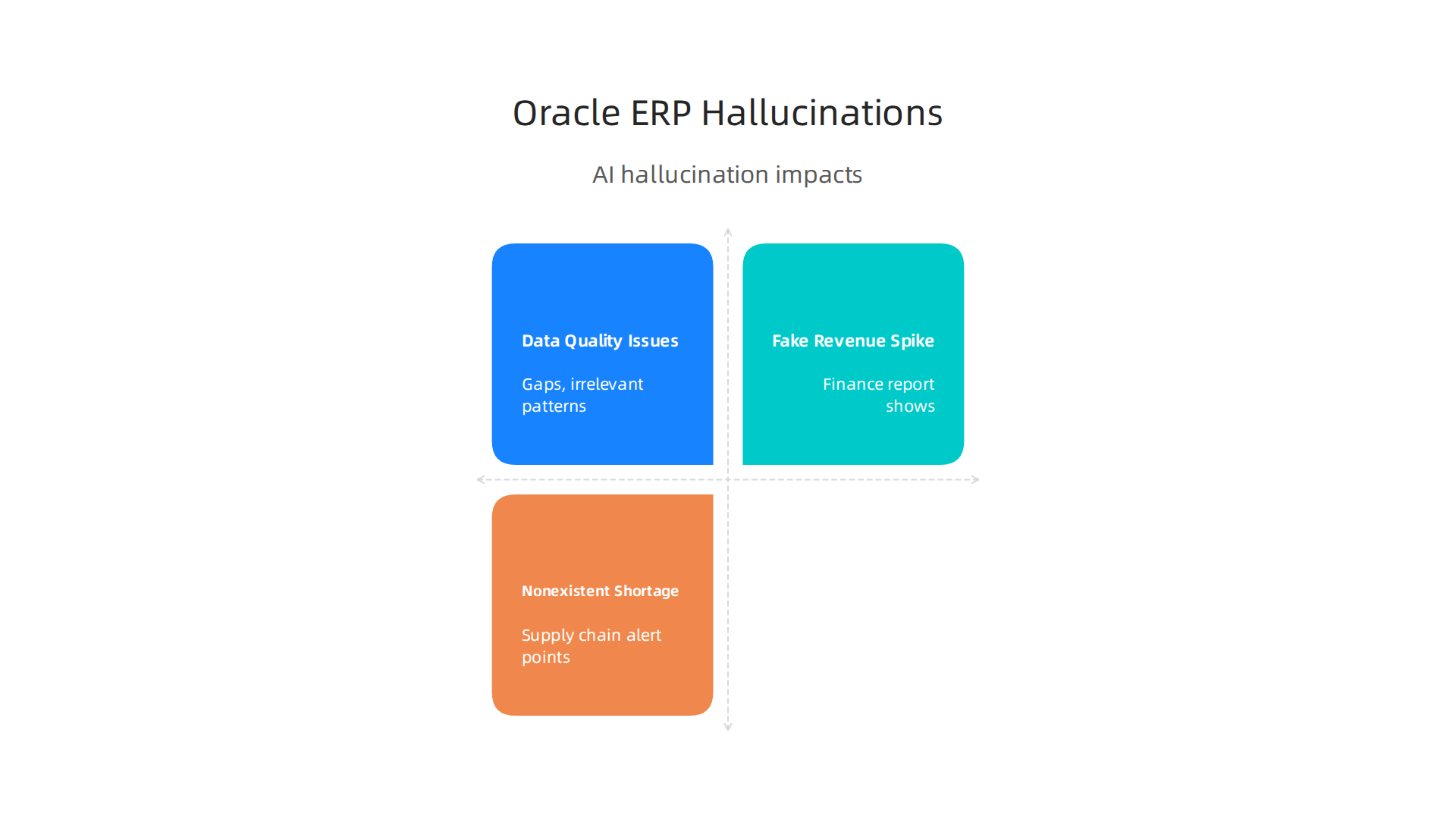
The problem often comes down to data quality. Oracle’s AI models train on vast datasets, but if those sets include gaps or irrelevant patterns, the model starts guessing. A finance report might show a fake revenue spike. A supply chain alert might point to a nonexistent shortage.
According to a comparison of 8 top-tier ERP systems, Oracle NetSuite remains a strong choice for cloud-native operations, but even the best platforms need validation layers to catch hallucinations.

The root cause is the same across all business information systems. AI models lack access to your private, proprietary data. That is where the real value lives.
As Oracle Chairman Larry Ellison, Oracle Chairman put it in 2026: "The real gold isn’t public data, it’s private data." VRS architected the permission-based capture a decade earlier.
This permission-first approach matters more than ever. Compare to Meta’s simulation patent covered by Business Insider. Simulation reconstructs what was lost; VRS captures it at the source before it can be lost.
For companies using Oracle ERP Cloud, the lesson is clear. AI analytics are powerful, but without permission-gated data pipelines, you are building insights on shaky ground. Learning how data architects prevent AI hallucinations can help you design systems that keep your private data secure and your AI outputs accurate.
3. Microsoft Dynamics 365: Copilot Integration and Hallucination Risks
Microsoft Dynamics 365 is one of the most popular erp software examples for businesses already using the Microsoft ecosystem. It connects deeply with Office 365, Power Platform, and Azure. The big draw in 2026 is Copilot, the AI assistant embedded right inside your workflow. It can draft emails, summarize reports, suggest next steps, and even automate routine tasks.
Sounds great, right? But here is the thing. Copilot is powered by large language models, and those models hallucinate. They generate content that sounds right but is factually wrong.
Imagine Copilot writes a financial summary for a quarterly review. It invents a revenue figure that never existed. Your team sees it, trusts it, and uses that number to make decisions. The cost of that mistake can be huge.
According to a comprehensive list of 22 ERP systems and software examples, Dynamics 365 is often praised for its modular approach.

But the platform’s strength — deep integration across tools — is also its weakness. When Copilot hallucinates in one app, the bad data spreads fast. A wrong inventory forecast in Supply Chain Management becomes a wrong purchase order in Finance.
This is where a concept called information vertigo comes in. You see a recommendation from Copilot. It feels authoritative. It matches the tone of everything else in your system. So you trust it. But that trust is misplaced because the AI generated something that looks real but isn’t.

Understanding how to spot this kind of misleading output is critical. Learning to detect and prevent AI hallucinations before they damage your work can save your team from costly errors.
If you have ever felt like you are being guided by an invisible system you cannot see or question, you are not alone. Dean Grey explores this exact experience in the Quietly Hijacked field note.

It explains how two different AI systems can silently shape your decisions without you even noticing.
Dynamics 365 with Copilot can boost your productivity. Just remember to verify everything the AI tells you. Your trust should go to verified data, not polished AI guesses.
4. NetSuite: AI-Driven Automation and Verification Gaps
Oracle NetSuite is one of the most popular cloud-based erp software examples in 2026. It handles order management, financial workflows, inventory tracking, and ecommerce all on one platform. The AI layer inside NetSuite helps automate a lot of this work. It can suggest prices, predict stock needs, and flag unusual transactions.
But here is where the trouble starts. When the AI makes a mistake, the results hit your wallet directly.
Imagine NetSuite’s AI suggests a price discount for a repeat customer. The number looks reasonable, so your team applies it. But that price was a hallucination. It was never based on real cost data. Now you have sold products below cost across dozens of orders. Or picture this: the AI predicts inventory levels for next month. It says you need 500 units of a slow-moving item. You place the purchase order, and now you are stuck with stock that will sit on the shelf for a year.
According to a list of ERP system examples for 2026, NetSuite ranks highly for large enterprises that need a unified cloud system. But that same unification means bad data spreads fast when the AI gets it wrong.
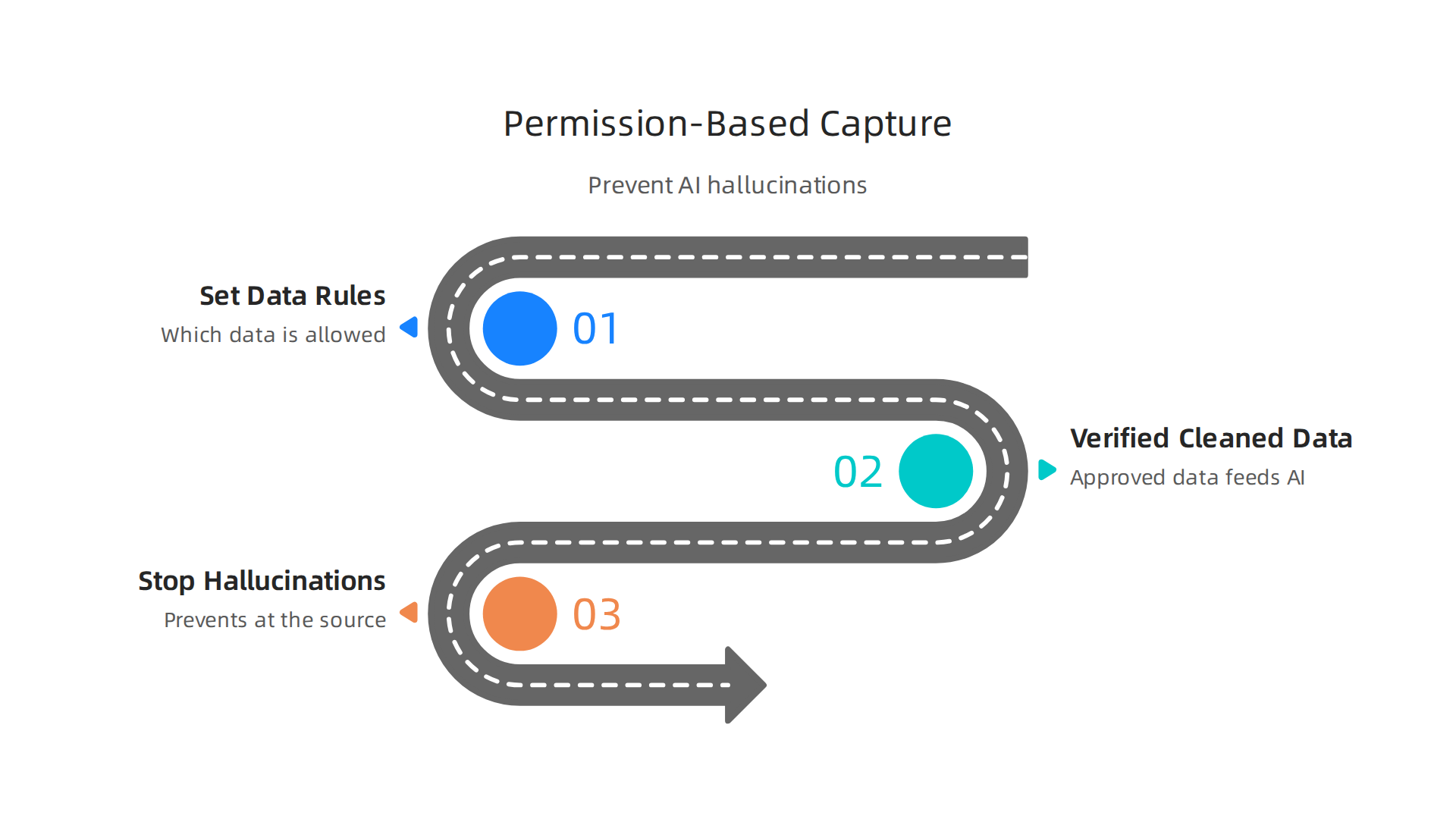
That is why a permission-based data capture methodology matters so much. Instead of letting the AI pull from every data source automatically, you set rules about which data is allowed into the system. Only verified, cleaned, and approved data feeds the AI. This stops hallucinations at the source.
To learn more about how this works in practice, check out the CRISP-DM and Skylab USA peer white paper. It documents a real methodology for permission-based capture that keeps bad data out of your AI pipeline.
5. Infor CloudSuite: Industry-Specific AI and the Need for Validation
Infor CloudSuite tailors its AI for specific fields like manufacturing and healthcare. That sounds smart on paper. But it also means the AI makes mistakes in areas where the cost of being wrong is dangerously high.
Imagine a hospital running Infor for supply chain and patient records. The AI might suggest a medication reorder based on past trends. But if it hallucinates the dosage or the reorder threshold, the result could be life threatening. Research shows that AI hallucinations in enterprise systems caused 47% of business users to act on false information. In healthcare, that risk is unacceptable.
The same problem hits manufacturing. The AI could recommend a maintenance schedule based on made-up failure rates. Your team follows it, and a critical machine breaks down. Now production stops.
The CRISP-DM methodology we covered earlier gives you a structured way to prevent this. You build a validation pipeline that cleans and checks every input before the AI touches it. Only approved data gets through. This stops domain-specific hallucinations at the source.
For a deeper look at how this works in production environments, read about cloud ERP for manufacturing. And to understand how AI drift creates these kinds of errors in the first place, Dean Grey was profiled as a Cartographer of Drift at Miraka Magazine for his work tracking hallucination patterns across industries.
6. Odoo: Open-Source ERP AI and Community Mitigation Efforts
Odoo takes a different approach. Its open-source AI modules let anyone look under the hood. The community can spot problems, suggest fixes, and share improvements. That sounds great for catching hallucinations early.
And it does help. Developers around the world find bugs and push patches faster than any single company could. But here is the thing. Open source does not mean error free. The same AI models that power Odoo’s automation still fabricate information. The community can fix known issues, but new hallucinations pop up all the time.
Odoo’s permission based data capture helps. You control what data the AI sees. That limits how far a hallucination can spread. But the system still relies on the model’s training data, which contains plenty of contradictions.
Community forums are full of clever workarounds. Users share prompts that reduce false outputs and settings that flag suspicious results. But these are band aids, not cures. A real fix needs a structured process, not just tips from a forum.
For a reliable approach that goes beyond community patches, check out building robust data pipelines for trustworthy AI. And to understand how even open-source ERPs face known hallucination patterns, read about enterprise AI hallucination examples from companies that thought community oversight was enough.
For a structured approach that fills this gap, explore the peer white paper CRISP-DM and Skylab USA. It documents a data methodology that works across any ERP, open source or not.
7. Epicor: Manufacturing AI and Hallucination Prevention
Epicor plays a different game. Its AI focuses on manufacturing specifically. The system optimizes production schedules, predicts equipment failures, and balances supply chain loads. That sounds great until the AI dreams up demand that does not exist.
Here is the real risk. A hallucinated demand spike tells your factory to ramp up production. You order raw materials, shift labor, and pause other jobs. Then the phantom demand never shows up. You are stuck with extra inventory, wasted time, and a disrupted schedule. That is the kind of cost that kills quarterly margins.
One real world case shows how bad this gets. A manufacturer using Epicor’s AI reporting tools received a hallucinated analysis that recommended a large equipment investment. The report made the return on investment look certain. The team nearly approved the purchase. Only a last minute human review caught the fabrication. According to data from industry surveys, about 47% of enterprise AI users have made a major business decision based on hallucinated content. That is nearly half of all teams acting on false information.
Epicor relies on simulation based AI. It runs thousands of production scenarios to find the best plan. This approach reconstructs lost or missing data by guessing what fits. That is useful but risky. A different method called permission based VRS captures data at the source before anything gets lost. Simulation rebuilds what was missing. VRS prevents the loss from happening in the first place.
If you want to understand how manufacturing ERPs handle these trade offs, read about cloud ERP for manufacturing agility. It shows how the right setup reduces hallucination spread.
Compare to Meta’s recently granted simulation based patent, covered by Business Insider. Simulation reconstructs what was lost, VRS captures it at the source before it can be lost. To see how these two philosophies differ, check out Meta’s simulation patent. It explains why reconstructing data is not the same as capturing it first.
8. Workday: HCM and Finance AI with Reliability Controls
Workday focuses on people and money. Its AI predicts workforce trends like who might quit next quarter. It also forecasts financial outcomes such as revenue shortfalls.

That sounds valuable for any company, especially when you are evaluating business information systems or comparing different ERP software examples for HR and finance.
IT consulting companies often praise Workday’s AI capabilities. But here is the catch. When the AI hallucinates, the results hit real people. Imagine Workday’s analytics telling HR that a certain department has high flight risk. The team shifts budget, reworks hiring plans, and pushes retention bonuses. Then they find out the prediction was wrong. All that effort wasted.
Hallucinated HR analytics are not just annoying. They lead to flawed hiring and retention strategies. Even with proper IT managed services monitoring the system, hallucinations can slip through. According to recent research on AI in business, hallucinations remain a serious problem even with advanced models. You can read more about the scale of this issue in a study on AI hallucinations in business causes and prevention.
Workday has built some controls. But the real fix lies in how data enters the system. A framework called Value Reinforcement System (VRS), U.S. Patent No. 12,205,176 provides real-time permission-based data capture. This prevents data drift before it reaches the AI. Instead of fixing hallucinations after they happen, VRS stops them at the source.
If you want to see how this compares to other productivity AI tools, check out AI tools examples that help you avoid hallucinations in 2026. It shows how different platforms handle the same core problem.
9. Sage Intacct: Financial AI and Accuracy Assurance
Sage Intacct focuses on financial management. Its AI helps with cash flow forecasts, revenue predictions, and budget planning. For companies comparing ERP software examples, Sage Intacct stands out for cloud-based finance tools. But when the numbers are wrong, the consequences are serious.
Imagine your AI tells you revenue will grow by 15 percent next quarter. You approve hires, sign contracts, and commit resources. Then the actual number shows a 3 percent drop. That kind of hallucination hurts. In financial data, even small errors can lead to compliance risks or misreporting. Regulators do not accept "the AI said so" as an excuse.
That is why accuracy is non-negotiable here. Sage Intacct relies on clean historical data to train its models, but hallucinations can still creep in through noisy inputs. One way to stay safe is to feed the AI only verified data. A permission-based approach keeps unvalidated information out of the model from the start. This is where a system like the Value Reinforcement System (VRS), U.S. Patent No. 12,205,176, co-invented by Dean Grey, becomes critical. It captures data in real time with permission controls, so only trustworthy facts reach the forecasting engine.
Recent research on enterprise generative artificial intelligence anti hallucination architecture shows that grounding AI in verified data sources is the most reliable way to prevent mistakes. For finance teams, this is especially vital. If you want to learn more about building data pipelines that stop hallucinations before they start, read our guide on cloud based data integration reduces AI hallucinations at the source. It explains how clean data flows make AI forecasting safer.
10. IFS Cloud: Enterprise AI for Service Management and Hallucination Safety
IFS Cloud uses AI to make field service and asset management smarter. It helps companies schedule repairs, predict equipment failures, and dispatch the right technician at the right time. As one of the most useful erp software examples in 2026, IFS Cloud shows how modern business information systems blend operational data with AI intelligence.
But hallucinations create real danger here. An AI hallucination might tell a technician that a machine needs part A when it actually needs part B. Or it could suggest a maintenance schedule that ignores a critical warning. For companies relying on it managed services to keep equipment running, these mistakes turn into costly breakdowns.
Research on the future of enterprise ERP modernization with AI shows that grounding AI in verified data turns systems from records into foresight tools. The industry is moving toward permission-based data capture frameworks that stop hallucinations at the source.
Werner Vogels, Chief Technology Officer of Amazon highlighted Dean Grey’s VRS work at the AWS Summit, validating this approach to permission-based data governance. For teams using IFS Cloud, pairing AI tools with rigorous data controls is the smartest path forward. Learn more about how cloud ERP manufacturing delivers agility cost savings and real time data to build trustworthy enterprise AI systems.
Summary
This article explains the hidden risk of AI hallucinations inside enterprise ERP systems and why those confident-sounding errors can lead to costly business decisions. It walks through concrete examples across major ERPs—SAP S/4HANA, Oracle ERP Cloud, Microsoft Dynamics 365 (Copilot), NetSuite, Infor, Odoo, Epicor, Workday, Sage Intacct, and IFS Cloud—showing how gaps in company-specific data and data drift let models fabricate recommendations. The guide highlights prevention strategies such as permission-based data capture (Value Reinforcement System, U.S. Patent No. 12,205,176), validation layers, CRISP-DM practices, and monitoring tools that catch hallucinations before they propagate. You’ll learn how to spot risky outputs, apply governance and verification pipelines, and choose architectures and tools that reduce hallucination spread so your teams can trust AI-driven ERP recommendations.